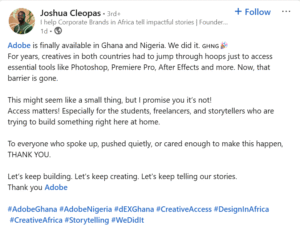
On 13 October 2025, Ghanaian brand consultant Joshua Cleopas posted a short but striking update on LinkedIn: “Adobe is finally available in Ghana and Nigeria. We did it.” The post, tagged #AdobeGhana and #AdobeNigeria, spread quickly among West African creatives celebrating a long-awaited breakthrough. In the screenshot shared by Techsoma, Cleopas thanked “everyone who spoke up, pushed quietly, or cared enough to make this happen,” describing it as a win for students, freelancers, and storytellers “trying to build something right here at home.”

The post didn’t come from Adobe itself, yet it carried the kind of authority only lived experience gives. Within hours, creative communities across X and WhatsApp groups in Accra and Lagos were celebrating a shift that felt both technical and symbolic.
The question then followed: was this simply a viral moment, or the first visible sign of Adobe’s quiet entry into West Africa?
From Workarounds To Direct Access
Evidence suggests Cleopas’s excitement wasn’t misplaced. Adobe’s Nigeria site now lists Creative Cloud plans in naira (₦), offering monthly subscriptions through the official portal for the first time. Ghana also appears in Adobe’s own Creative Cloud availability matrix, confirming access for individual users. These quiet changes remove long-standing hurdles that forced many creatives to buy in USD or depend on shared logins.
Until recently, most professionals across Ghana and Nigeria had to buy licences through South Africa or rely on shared agency bundles. The hurdles weren’t just financial. Currency conversion fees, limited card acceptance, and authentication issues often kept freelancers locked out of legitimate tools they needed for paid work.
Adobe hasn’t released a statement about this rollout, but its updated pricing pages and documentation, paired with Cleopas’s announcement, clearly show a gradual rollout focused on access first, publicity later. The move mirrors how platforms like Canva and Figma entered African markets by enabling local payments quietly before promoting it widely.
For many creatives, that discretion hardly matters. The change itself, finally being able to pay locally and log in without workarounds, represents years of advocacy finding a real result.
A Shift For Creators And The Market
For designers, videographers, and digital artists across West Africa, this change isn’t just another product update. It’s a quiet levelling of the playing field. The ability to pay for tools like Photoshop or Illustrator in naira or cedis removes one of the biggest barriers for creative professionals who have long operated outside the official Adobe ecosystem.
Freelancers and agencies can now build legitimate workflows that scale, without depending on shared or foreign accounts. For students, especially those in design and media schools, the implications are immediate. It makes professional-grade software accessible for learning and practice.
Still, the rollout is not without limits. Adobe’s Teams and Enterprise plans remain billed in USD through regional resellers or its South Africa office. Customer support and business partnerships are also routed through existing EMEA networks. In other words, users in Ghana and Nigeria now have the doorway, but not yet the full house.
Even so, Adobe’s inclusion of West Africa in its consumer pricing ecosystem is a clear signal. It recognises the region’s growing creative economy, one fuelled by storytelling, design, and digital entrepreneurship. Initiatives like dEX Ghana, Design Week Lagos, and Africa Creative Market have already built a foundation of tech-driven creativity. Adobe’s new accessibility simply puts global tools in the same hands driving those movements.
Quiet Steps, Big Implications
Adobe’s new visibility in Ghana and Nigeria didn’t arrive with press conferences or launch banners. It came through a LinkedIn post, quiet pricing updates, and the ripple of excitement among creators who had been waiting for years. That silence might be deliberate. Companies increasingly test new markets by turning on access first and watching how local users respond before making a full announcement.
What matters most is what comes next. With direct billing now active, creatives can build legitimate portfolios, pay fairly for tools, and compete globally. For Adobe, this may just be the beginning, but for Africa’s creative community, it already feels like a door finally opened.