
Nigeria’s telecom market is undergoing a quiet but consequential transformation. The competition that once centred on subscriber numbers and call rates has shifted to something more fundamental: the race to build network infrastructure capable of handling the country’s explosive data demand. Airtel Nigeria is investing heavily to stay in that race, and the numbers show it means business.
A 15 Percent Expansion and Counting
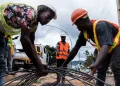
Airtel Nigeria CEO Dinesh Balsingh confirmed the company expanded its network footprint by about 15 percent between December 2023 and early 2025, growing from roughly 15,000 to 17,000 sites, with further expansion planned for 2026. That growth is not incidental. Balsingh described the investments as focused on deep rural communities, small towns and the fringes of major cities. This is designed to improve coverage, capacity and network resilience.
The scale of the ambition is clear. “Over the last two years, we have expanded our geographical network by close to 15 percent, and we intend to repeat that scale of expansion again in 2026,” Balsingh said.
The urgency behind the spending is equally clear. In February 2026, internet consumption in Nigeria reached 1.26 million terabytes, pushing existing networks closer to their operational limits. For operators, the priority is no longer expansion for growth alone, but preventing congestion in a market where millions rely on mobile data for payments, work, and everyday communication.
MTN’s Infrastructure Play Changes the Stakes
Airtel’s push comes at a moment when the competitive dynamics of Nigeria’s telecom sector are shifting in ways that go beyond tower counts. MTN Nigeria remains the market leader with greater scale and a head start on 5G deployment in major cities, but its most consequential move may be off the network itself. MTN is finalising a $2.2 billion acquisition of IHS Towers, Africa’s largest tower company.
If completed, the deal would give MTN direct control over a significant share of the country’s tower infrastructure, influencing rollout timelines, site access, and costs in ways that could be difficult for competitors to match. Airtel’s expansion takes on a strategic dimension beyond capacity building; its continued investment acts as a counterbalance in a market where infrastructure control is becoming increasingly concentrated.
The Broader Africa Picture
Airtel’s infrastructure push is not limited to Nigeria. Across the continent, the parent company is spending at scale. Airtel Africa expanded its fibre network to over 81,500 kilometres, adding approximately 4,000 kilometres during the nine months ending December 2025, as part of accelerated capital expenditure that reached $603 million.
The company reported a 14.6 percent increase in its data customer base, which now stands at 81.8 million, while average monthly data usage per customer rose from 6.9GB to 8.6GB. In Nigeria, the growth is particularly pronounced, with average data usage per customer jumping 26.2 percent to 10.7GB per month.
To close coverage gaps that physical towers cannot reach economically, Airtel Africa has successfully tested SpaceX’s Starlink Direct-to-Cell service in parts of Kenya with no terrestrial mobile signal, with plans to launch commercial services across all 14 of its markets starting in 2026.
Demand Is Outrunning Infrastructure
Despite all this investment, the challenge remains steep. At roughly 60 base stations per 100,000 people, Nigeria remains under-provisioned for its current and projected data consumption. Airtel is building aggressively, but so is everyone else and demand is rising faster than infrastructure can be deployed, leaving operators in a constant catch-up cycle.
The real contest, ultimately, is not just between Airtel and MTN. It is between the entire industry and the scale of connectivity Nigeria needs.