Pewbeam launched less than a year ago with a sharp pitch: AI-powered church presentations that automatically detect Bible verse references from a pastor’s speech and display them on screen in real time. No dedicated slide operator or manual clicking. Just speak, and the screen follows. It was niche, purposeful, and African-built, the kind of focused product that signals a maturing local tech ecosystem.

Then, last week, a developer announced he had built a fully functional open-source alternative in seven days.
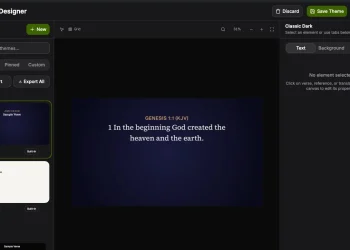
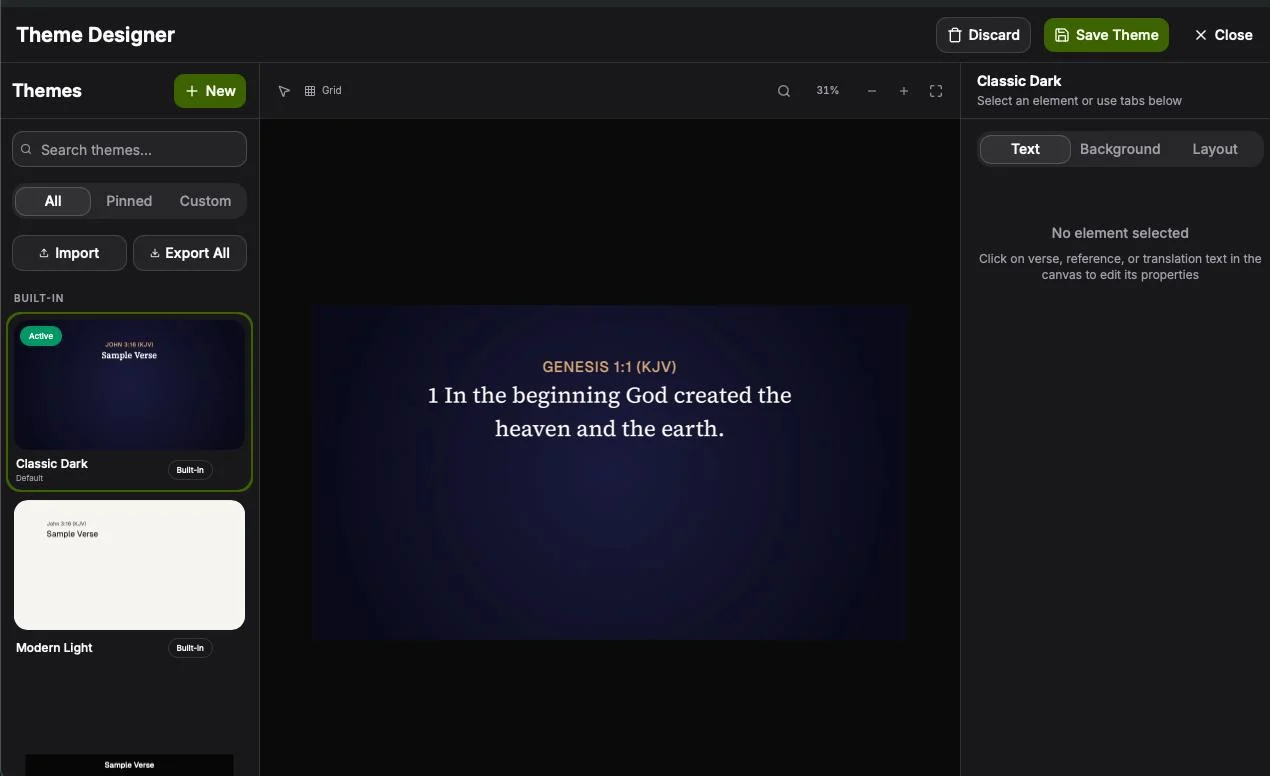
Ojebiyi’s project, Rhema, replicates Pewbeam’s core functionality using Tauri 2.0, a Rust backend, and a locally-running Qwen3-0.6B embedding model. He started it during a Sunday church service. By the following Sunday, his own congregation was using it live. The entire codebase is publicly available on GitHub, free to use, fork, and modify.
The Brutal Math of AI Niches
Let’s be clear: this is not about copying or bad faith. Ojebiyi built something on his own time and shared it with his community. But the fact that it happened so quickly and so easily should make every AI startup founder uncomfortable.
For the past couple of years, the conventional wisdom was that building a tightly focused AI tool was the smart play. Pick a specific problem, solve it well, and you would have enough of a head start to build a loyal user base before anyone else showed up. The flaw in that logic is now obvious: the cost of building AI products has dropped so sharply that the head start is much shorter than anyone expected.
Pewbeam’s product listens to speech, identifies Bible verse references, and pulls them up on screen. That is genuinely useful, but it is not technically complex by 2025 standards. Ojebiyi did not hack Pewbeam or borrow its code. He simply used the same freely available AI tools and frameworks that anyone with the right skills can access today, and rebuilt the core functionality in a week. That is the uncomfortable part. The barrier to replicating what once looked like a defensible product has quietly collapsed.
What Moats Actually Look Like Now
The honest truth is that features alone have never been a durable moat for software companies. The open-source moment Pewbeam is now experiencing echoes what happened to dozens of productivity and developer tools once the underlying AI capabilities became accessible. The question for any AI startup is whether you have built something they cannot easily replicate alongside it.
For Pewbeam, that could mean distribution; the number of churches already onboarded and dependent on the product. It could mean support, reliability guarantees, and an update cadence that an open-source project maintained by volunteers cannot match. It could mean integrations, cross-user data insights, or a commercial relationship with church management software. These are the layers that transform a replicable product into a defensible business.
Rhema has none of those, yet. Open-source projects serving niche communities often move slowly once the initial excitement fades, struggle with inconsistent maintenance, and rarely invest in the onboarding experience that drives adoption among non-technical users. Pewbeam, if it executes well, has a window.
A Warning for Every Niche AI Builder
The African AI startup ecosystem is young and still working with limited capital. That makes what happened here especially worth paying attention to. The same affordable AI tools that help first-time founders build products are available to everyone else, too. If your entire business sits on top of a product that someone can rebuild from scratch in a week, you are more exposed than you might think.
That is not an argument against building niche AI tools. It is an argument for understanding what you are actually selling. The tool is not the business. The business is the trust you have built with your customers, the quality of the experience around the product, and the practical knowledge you have accumulated from real-world use. Nobody can fork any of that.
Pewbeam’s biggest competitor is not Rhema. It is the clock. Every week that passes is either widening the gap between itself and any open-source alternative or closing it.