Algeria has opened a clear new lane for local tech builders. The Ministry of Knowledge Economy, Startups and Micro Enterprises, working with the ministries in charge of water resources and higher education, launched a national call for technology solutions in the water sector. The program targets a real public need. It asks startups, researchers, incubators, experts, and Algerian talent abroad to build tools that help the country save water, better manage its supply, and adapt to climate stress. This is a practical idea, not a branding exercise, because it focuses on leaks, desalination efficiency, water reuse, smart irrigation, and AI and IoT tools for water management.

A focused call with a clear target
Algeria did not ask the founders to solve everything at once. The call seeks ideas that cut water leaks and waste, improve the energy performance of desalination plants, expand water reuse, and support smarter irrigation for agriculture. Water utilities do not need broad promises. They need tools that help operators find losses faster, run sites remotely, and stretch limited supply across homes, farms, and industry.
Algeria’s Digital Algeria 2030 strategy puts public service digitalization, data sharing, public-private partnerships, and the use of AI and IoT at the center of state modernization. In simple terms, the government already has a policy framework that supports this water push. That gives the program more weight than a one off competition with no path to adoption.
Water pressure is already visible
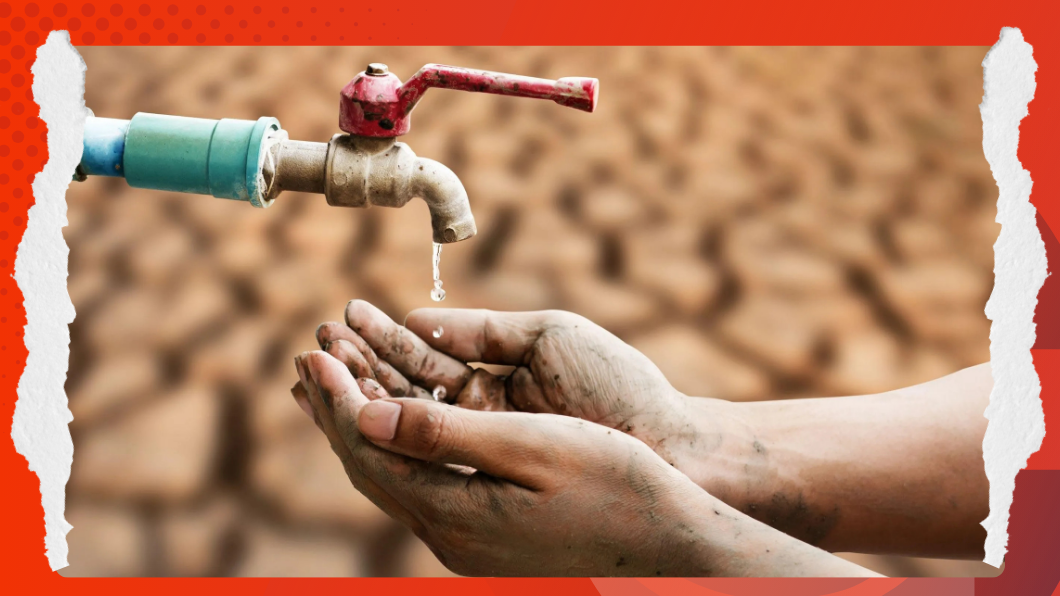
Water shortages have already pushed the issue into daily life. In June 2024, protests broke out in Tiaret after months of water rationing left taps dry and forced residents to queue for household water. The Associated Press reported that reservoirs serving the region had fallen to about 20 percent of capacity, while reduced rainfall hurt both surface water and groundwater recharge. That kind of pressure turns water management into a service delivery issue, not just an environmental one.
At the same time, Algeria has kept spending on supply. Reuters reported in May 2024 that the country expected desalinated water production to reach 3.7 million cubic meters per day by the end of that year, enough to cover 42 percent of the needs of a population then estimated at 47 million. The same report said Algeria aims to reach 5.6 million cubic meters per day by 2030. That scale shows why the new startup call matters. Once a country invests billions in water infrastructure, software, sensors, remote controls, and efficiency tools, they stop looking optional. They become part of the core system.
The tech that makes sense now
Recent water tech trends give Algeria a realistic playbook. UNCTAD says new digital tools already help utilities and governments monitor infrastructure and improve efficiency. The agency points to smart metering that provides real-time usage data, drone-based early warning systems, deeply integrated Earth observation systems for disaster prediction, IoT-based monitoring, and AI-supported data systems that help managers act faster. These are not science lab ideas. They address known utility problems such as leak detection, poor visibility, delayed response, and weak planning.
The World Bank backs the same direction. It says the Middle East and North Africa region has the world’s lowest average annual water availability per person at 480 cubic meters, less than 10 percent of the global average. It also says some water distribution systems in the region lose up to 50 percent of supply. That is where digital tools earn their value. A utility does not need a flashy app when half the water disappears before it reaches users. It needs visibility, control, and faster maintenance.
Early signs of execution are already there
Algeria has already started to connect startups to public water operations. During World Water Day activities in March 2026, the Water and Sanitation Company of Algiers, known as SEAAL, signed an agreement with public accelerator Algeria Venture to support startup projects in water and sanitation services. The first pilot under that program uses a remote management system for a hydraulic site, built with a startup partner. That matters because it moves the conversation away from pitch decks and toward field testing inside a real utility setting.
This is the part many public innovation programs miss. Founders can build useful tools, but utilities need a route to test, buy, and scale them. Algeria now has the outline of that route. A national call brings in ideas. A public accelerator helps structure them. A utility pilot shows what works in practice. If the government keeps those three steps connected, it gives local water tech firms a fair chance to grow inside the country instead of waiting for foreign vendors to solve local problems.
What will decide if this works
The next phase will decide the value of this initiative. Algeria does not need a long list of submissions. It needs working pilots that reduce non-revenue water, improve desalination efficiency, support irrigation decisions, and help utilities manage sites in real time. The country also needs procurement rules that let public operators adopt proven tools without getting trapped in slow processes or one-year experiments that never scale. The good news is that the problem is now well defined, the policy support is in place, and the technology already exists in usable form.
Algeria’s new water tech initiative stands out because it treats startups as builders of public infrastructure tools, not as mascots for innovation branding. That makes it relevant. It also makes it timely. Across the water sector, the winning tools now do simple things very well. They detect waste, improve visibility, cut response time, and help operators make better decisions every day. If Algeria keeps the program tied to those outcomes, it will build something useful for both citizens and the local tech sector.