One moment, you’re scrolling through memes about vibe-coding your own SaaS killer. The next, you’re watching an AI founder launch their product live to millions of developers worldwide. A minute later, developers across the globe are testing, breaking, and commenting on it publicly.

That’s software development in 2026.
Not through press releases, not through conferences, but through X (formerly Twitter).
For developers, founders, and AI makers, X has transcended a social media platform and become a live distribution mechanism for ideas, feedback, and influence.
The State of Play in 2026
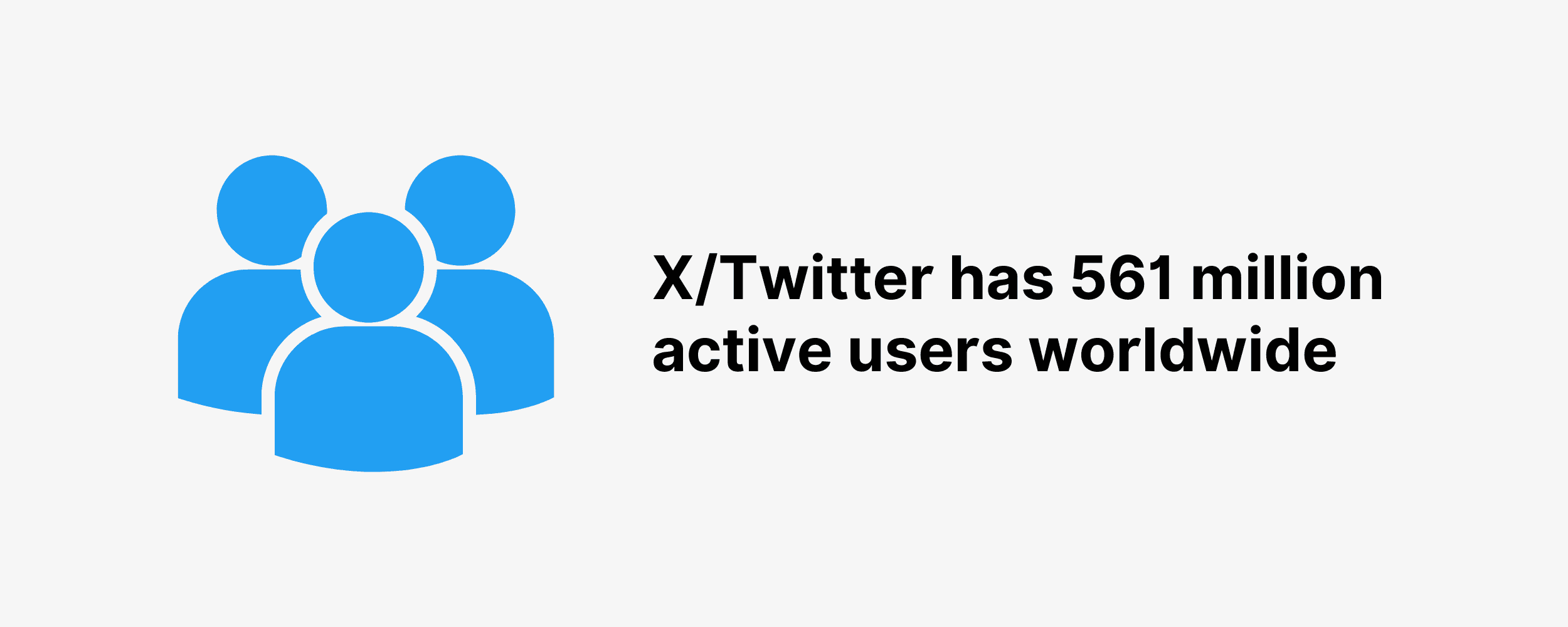
X still commands massive reach, with over 557 million monthly active users globally, and some estimates placing the platform closer to 561 million users worldwide. Its scale alone sustains its relevance.
More importantly, its influence extends beyond raw size. Research confirms developers actively use platforms like X to stay updated on software trends, coordinate work, and share technical knowledge. In fact, studies show 56% of developers link their Twitter profiles directly to their technical identity, reinforcing its role in reputation building and discovery.
The density of builders is increasing as AI adoption accelerates. With 84% of developers now using AI tools, rapid feedback loops and real-time knowledge exchange have become essential infrastructure.
Competing platforms continue to grow. Threads, for example, has reached hundreds of millions of users. But X still maintains a significantly larger and more technically dense ecosystem, preserving its role as the primary distribution layer for builders and researchers.
X as Distribution Infrastructure for Builders
Historically, builders needed institutions (media, conferences, accelerators, or warm intros) to reach audiences. Distribution was slow, expensive, and permissioned.
X removes most of those frictions. A single thread can:
- Attract early users — A prototype or workflow demo posted publicly draws immediate replies, tests, forks, and integrations from interested developers.
- Attract collaborators — Clear problem statements surface complementary skills in real time; public replies frequently evolve into DMs, shared repos, or joint work.
- Attract investors — Consistent, high-signal posting builds observable conviction. Thread series on niche technical bottlenecks function as dynamic, verifiable pitch material.
- Accelerate technology adoption — Frontier labs and companies often surface features or insights first on X. The platform becomes the initial dissemination layer: developers experiment publicly, share results, and generate feedback waves that shape roadmaps.
Examples are routine. Major AI model updates and enterprise announcements from labs routinely debut or gain traction via direct X posts, enabling same-day public testing and iteration at scale.
Why Techies Still Flock to X
The incentives align with builder workflows:
- Real-time iteration loops (post → critique → refinement in minutes).
- Permissionless reach to relevant audiences.
- High-density signal within tech clusters (curated follows and lists filter for AI, dev tools, and startup discourse).
- Attribution flywheel: every contribution compounds personal reputation over time.
The Structural Risks
X is not neutral infrastructure. Algorithm changes can change visibility overnight. Account-level changes can be temporarily or permanently disruptive to distribution. Building on one platform for all discovery, audience, and capital signaling can be risky due to platform volatility.
This does not change X’s place. It clarifies the smart approach to using X. It should be your primary, but not exclusive, distribution infrastructure. Email lists, owned media, presence on GitHub, and multiple platforms for archiving should be part of your risk mitigation strategies.
The Competition & Why X Still Wins
LinkedIn has high-quality enterprise networking but is slower-paced with stronger gatekeeping. Reddit has high-quality topic-specific archives but is also slower-paced with weaker attribution signals. The new platforms, such as Bluesky and Threads, are growing but lack X’s density of frontier users and real-time feedback density.
X’s public scale, speed, and attribution density remain unmatched for the pace of idea-to-user, idea-to-collaborator, or idea-to-capital conversion.
The Structural Shift
Distribution power, historically, has resided with institutions. In 2026, distribution power is shifting to individuals with the capacity to ship and attribute publicly.
For developers, founders, and AI builders, having a presence on X represents a strategic distribution layer, not optional entertainment, but publicly observable infrastructure for leverage.
The platform has clear limitations: noise, algorithmic variability, and dependency risk. Yet structurally, no equivalent matches its density and velocity in the current tech ecosystem.
How has X shaped your own discovery of collaborators, users, or opportunities?