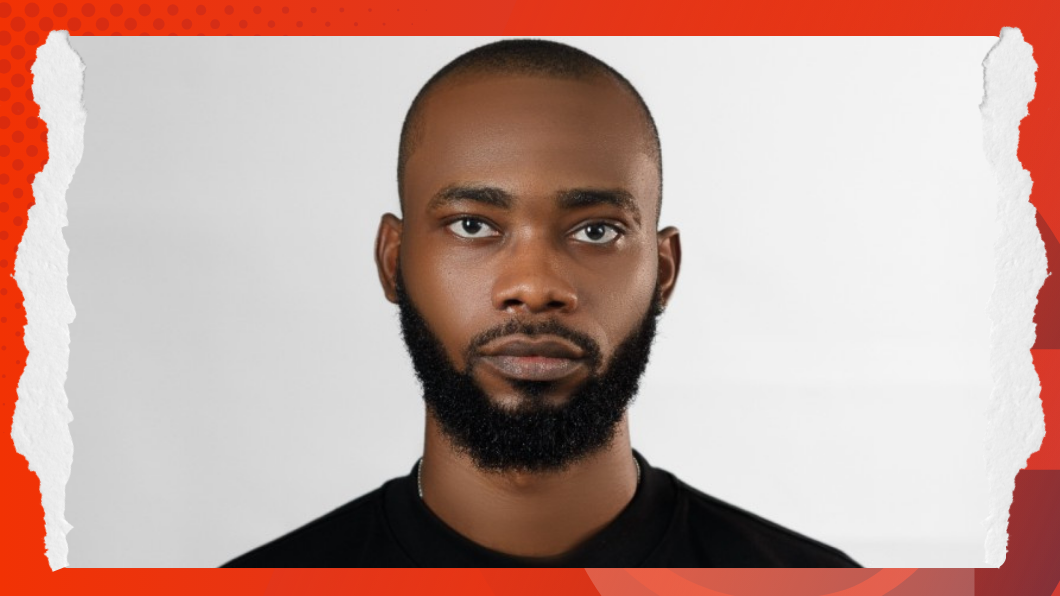
Welcome to Digital Work-Life Series (#2)!
Digital Work-Life is a weekly interview series that explores the real stories behind people's work and how it shapes their lives. Each episode focuses on the the experiences, challenges, lessons, and impact of professionals across different industries, communities, teams, and beyond. It highlights how they balance work and life, giving insights and inspiration from real life and work experiences.
Career paths are rarely linear, and for Daniel Ayomide, design was never a sudden pivot but a quiet thread woven through his life from childhood. He started by learning basic computing at a neighbourhood computer centre and later studied History and International Studies at university. His journey into product design was never a carefully mapped plan; it evolved naturally over time.

Today, Daniel works across SaaS, E-commerce, Health, and EdTech, building digital experiences that prioritize clarity, emotion, and trust. In this edition of Digital Work-Life, he reflects on finding his path in UX, the influence of studying history on his problem-solving mindset, the realities of remote creative work, and why design must always humanize technology, especially in Africa’s evolving tech ecosystem.
Be the first to get top stories, insights, trends, events, and conversations shaping the future of tech and innovation across Africa, and beyond.
Q: You studied History and International Studies, but now you are a Product designer. How did that transition happen, and what was the defining moment that made you realise this was a space you wanted to build in?
Daniel: For me, it doesn’t feel like I transitioned into the tech field; I was introduced to technology from a young age by my mom, back when it wasn’t commonly referred to as “tech.” When I was around 12 to 14 years old, my mom enrolled me in an apprenticeship at a computer centre to learn the basics of computing.
Fast forward to my university days, where I worked as a designer and café manager while also designing flyers and logos for fun and extra money. I handled tasks like typing, printing, and school fee payments; basically, everything you can imagine a computer café doing.
What’s amusing is that I never thought I would become a full-time designer. I assumed it would just be a phase that would end after university. However, everything changed when I met a lady at one of the cafés I often visited in Lagos. She mentioned that she was a UI/UX designer, which piqued my curiosity. I started researching the field and realised it was a perfect fit for my thinking and problem-solving skills. After completing my first internship, it became clear to me that this was the career I wanted to pursue.
Q: How does your background in history and international studies inform the way you approach design problems today? Are there unexpected skills from your degree that translate into your design work?
Daniel: It really did. History and International Studies are focused on understanding the past and solving problems. My background has significantly shaped my ability to think quickly, connect different ideas, and comprehend issues more effectively. It has enhanced my problem-solving skills and helped me learn how people think and how they tend to react to various situations. I just had to translate that into design, and it seems easy to figure things out quickly.
Q: What does good collaboration look like to you? How do you work with developers, product managers, and stakeholders who may not have a design background?
Daniel: In any team, it’s inevitable that not everyone will have a technical or design background. However, this diversity is what makes a business function effectively; not everyone needs to be an expert in design. Communication and mutual understanding are key. It’s important for the team to grasp the reasons behind each design decision and the purpose of every element, as well as why it works.
Every design interface should consider psychological perspectives and incorporate human feedback to create a sense of accomplishment. If the team reviewing your designs before they reach real users lacks this understanding, it presents a problem. Therefore, communication and understanding how design solves problems is a collective responsibility. However, it is primarily the designer’s job to ensure that everyone in the team comprehends the design they have created.
Q: You work across diverse sectors, SaaS, E-commerce, Health, and EdTech. How do you adapt your design approach for such different industries, and what universal principles guide your work regardless of the sector?
Daniel: Every industry has its own unique style, goals, emotions, constraints and psychological impacts that I must adapt to in my design approach. In SaaS, I prioritize clean, efficient flows for daily productivity. E-commerce gets bold visuals and trust signals to drive quick purchases. Health demands calm colors, high accessibility, and privacy-focused clarity. EdTech leans toward engaging.
That said, universal design principles guide my work regardless of the sector, and these are fundamental principles of design that remain consistent across different sectors; alignment, contrast, repetition, and proportion provide a consistent foundation, ensuring clarity and usability in every project.
I may thoughtfully bend these rules based on specific goals. Typically, what varies across industries is the design elements, like typography and color.
Q: What does a typical workday look like for you?
Daniel: My typical workflow runs from 10:00 AM to 4:00 AM. Currently, I work remotely, which means my days generally consist of me, my coffee, and morning meetings. After the meetings, I spend some time on design work or reading, then return to design tasks. I allocate about an hour and 30 minutes for social media, and the rest of the night is dedicated to work, which involves researching, designing, or working through a design challenge.
Q: What’s the most challenging aspect of your work that people outside the design world might not understand? What did you learn from them?
Daniel: When you mention that you’re busy, others often interpret it as you simply being focused on design work and glued to the screen all day. However, as a UX designer, much of your job involves reasoning, thinking, researching, and sketching. Additionally, many people mistakenly equate UI/UX design with graphic design. Over time, I’ve learnt that what is important is to connect with the right people who understand and appreciate the depth of what you do.
Q: Beyond aesthetics or usability, what impact do you hope your work has on the people who eventually use the products or brands you help shape? And can you share a moment where you saw that impact clearly?
Daniel: At this moment, I find great joy in seeing people visit the websites I have designed, whether they were developed using custom code, WordPress or Framer. Their appreciation serves as a testament to the connection between design and emotion. Good design fosters trust, and the way a design is executed can convey integrity as well.
The real impact occurs when a design is finally launched, and I witness people using it. It’s gratifying to see some individuals happy, while others may not be completely satisfied. This experience has taught me that as designers, we must always approach our work with an understanding of our audience and their feelings.
Q: As a designer, creative work can bleed into personal time. How do you establish boundaries between work and life? Do you have any rituals or routines that help you?
Daniel: I’m still finding it challenging to manage my time. The only free time I have set aside for myself is on the weekends, but I’m planning to join a gym soon. It’s not easy to find that balance, but I’ve made it a priority to dedicate at least two hours each day to personal activities outside of work since last year. Some days, I even manage to spend four hours. Two in the day and two in the evening, focusing on personal interests and exercising.
Q: Where do you find inspiration outside of design work?
Daniel: Outside is everywhere.
Q: How has your work as a designer shaped who you are as a person? What has it taught you about yourself?
Response: I now see my goals as extending beyond simply wanting to be a tech guy or just designing for people. I aim to make an impact in the industry and in the lives of those around me. To be a UX designer, it is essential to pay close attention to detail, like every single detail. I have learned to be mindful of everything I do and be aware of the people and events in my environment.
Q: How do you see product and brand design evolving in the next few years, especially in the Nigerian or African context?
Daniel: I see AI making things easier for every creative, orchestrating and gradually shaping the next phase of the tech industry. New jobs and pathways will be created, and some skills will become accessible to people without needing to spend excessive time learning them. However, Africa is following this trend very slowly, and I fear it will keep us at a disadvantage. Product design will continue to evolve, and there will always be a need for designers to humanize product and brand identities that people can relate to.
Q: What advice would you give to someone who is starting from scratch and wants to grow a creative career that supports life beyond just a paycheck?
Daniel: Learn gradually, and don’t pick a niche quickly, but have a path, then see beyond building for brand or with brand, see impact and nurture the impact.
For Daniel, product design is more than clean interfaces or seamless flows, it’s about understanding people, anticipating emotion, and creating experiences that feel intentional. His story is a reminder that impact often grows from curiosity, consistency, and the courage to follow what feels aligned, even when the path isn’t obvious at first.
In Africa’s tech ecosystem, alongside AI and emerging digital opportunities, voices like Daniel’s highlight the importance of thoughtful design, collaboration, and human connection.
Because at the end of the day, good design isn’t just seen, it’s felt.
The Digital Work Life Series will continue to spotlight digital professionals who shape their lives through the work they choose and the values they uphold. Their journeys offer practical insight for anyone building a career in today’s digital economy.
If you want to share your own story of work, life, and impact, send an email to faith@techsoma.net or connect on LinkedIn. Your experience can help someone else make a clearer, more confident decision.