
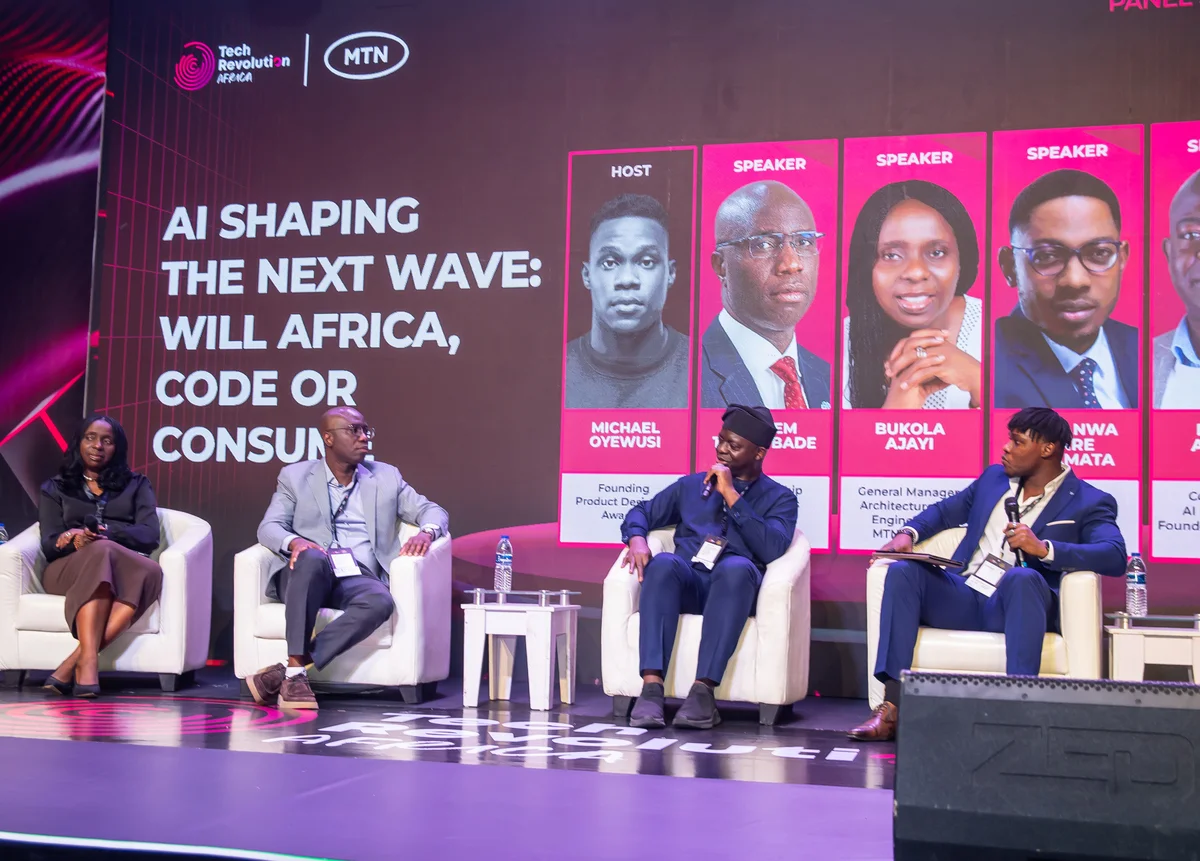
When the stage lights went off at Tech Revolution Africa 2.0, one thing was clear. The future of artificial intelligence on the continent is not a theory. It is a choice.

Moderating a panel of industry experts, Michael Oyewusi opened the session by reframing the AI debate entirely. Instead of asking how Africa can access AI, he asked whether the continent intends to own it.
The conversation quickly shifted the room from optimism to stark clarity. Featuring insights from industry leaders, including Bukola Ajayi, Dotun Adeoye, and Kazeem Tewogbade, the consensus was unanimous. Adoption is easy, but ownership is hard. Dependency is quiet, but it is extremely expensive.
The Illusion of Access Versus True Control
A recurring theme from the panel was the difference between having access to global technology and having actual control. Digital sovereignty is not about isolation. It is about ensuring local enterprises are not permanently dependent on external systems.
Africa generates enormous data volumes, but capturing that value depends entirely on local infrastructure and monetization frameworks. The core takeaway from the panel was resounding. You cannot build true power on rented foundations.
The Alignment of Talent and Capital
Kazeem Tewogbade highlighted that Africa does not lack talent. It lacks structured systems for scale. The challenge of retaining brilliant minds is tied directly to opportunity, ownership, and patient capital. While competing globally carries risks, choosing not to compete at all is fatal. The bottleneck is not intelligence. It is the alignment between talent, capital, and ambition.
Context is Power
Drawing from his experience designing AI systems deployed across twenty African countries, Oyewusi grounded the discussion in practical realities. His framing shifted the panel from abstract AI ambition to questions of infrastructure ownership, applied systems, and long-term sovereignty.
Building locally reveals that while data is fuel, context is absolute power. African healthcare data behaves differently. Nuances in language, culture, and infrastructure require models adapted to local realities. Imported systems often miss these subtleties entirely.
While foundational model development requires immense capital, applied vertical solutions in sectors like healthcare, fintech, and agriculture offer immediate value. Builders might not need to manufacture the engine, but they must own the vehicle and the route.
Digital sovereignty is highly practical. It shows up in where infrastructure is hosted, who owns user data, who captures revenue, and who trains the models. Outsourcing those decisions means outsourcing the future.
The Next 24 Months
Africa is no longer just a market for global technology. It is a continent of builders. The transition from consumption to capability relies heavily on data ownership, infrastructure investment, and intentional policy.
As Oyewusi concluded, the AI future of the continent will not be decided by talent or ambition alone. It will be decided by ownership, infrastructure, and the choices made early on. The question is not whether Africa will use AI. The question is whether Africa will own any part of it.