On paper, Nigeria is one of the cheapest countries in the world for mobile data. A single gigabyte costs far less than it does in the United States or the United Kingdom. Yet for millions of Nigerians, staying connected remains a financial strain. The contradiction shows that affordability is not about price alone; it is about income.

Cheap Prices and Thin Wallets
Nigeria consistently ranks among the countries with the lowest cost per gigabyte globally. Telecom operators promote affordable bundles, and headline figures suggest data is widely accessible. But these comparisons often ignore a critical variable. The average Nigerian earns a fraction of what users in developed economies make.
When income is low, even cheap services become expensive. A few thousand naira spent on data can represent a meaningful share of monthly earnings, especially for students, gig workers, and informal sector workers who rely on unstable income streams.
The Income Gap That Skews the Math
In high-income countries, mobile data costs take up a negligible portion of monthly wages. In Nigeria, the same data purchase competes with food, transport, rent, and power. What looks affordable in dollar terms becomes costly in real life.
For many Nigerians, spending on data is not discretionary. Internet access is tied to work, education, banking, and social participation. As a result, data spending often becomes a fixed cost rather than a flexible one, regardless of income level.
When Connectivity Becomes a Tax on Opportunity
The burden of data costs is most visible among young people and digital workers. Remote jobs, online courses, content creation, and freelancing all depend on reliable internet access. Video calls, cloud tools, and AI-powered platforms consume far more data than traditional browsing.
This creates a paradox. The digital economy promises opportunity, but accessing it requires recurring data spend that many cannot comfortably afford. In effect, connectivity becomes a gatekeeper to economic mobility.
Hidden Costs Beyond the Bundle
The issue is compounded by structural challenges. Poor network quality leads to wasted data through dropped calls, repeated downloads, and failed uploads. Frequent power outages push users toward mobile data instead of cheaper fixed broadband alternatives. Devices themselves are expensive relative to income, increasing the total cost of being online.
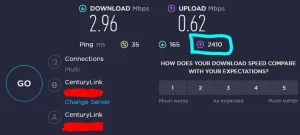
In this environment, the advertised price of data understates the real cost of staying connected.
Rethinking Affordability, Not Just Pricing
Nigeria’s data market is competitive, and pricing alone is not the core failure. The deeper issue lies in income levels, infrastructure gaps, and productivity constraints. Until wages rise and connectivity becomes more efficient, low data prices will continue to mask high economic pressure on users.
True affordability is reached when access to the internet does not force trade-offs with basic needs. In Nigeria, that threshold remains out of reach for a large part of the population.
The Real Measure of Cheap Data
Nigeria’s data is cheap by global comparison. But affordability should be measured by how much income it consumes, not how it ranks on a price chart. When viewed through that lens, internet access in Nigeria is not a bargain. It is a quiet, recurring cost that eats into already limited earnings.
The challenge ahead is not trying to lower prices further. It is building an economy where being connected does not feel like a luxury.