
Africa needs AI talent. Urgently. Every single African organisation surveyed in a 2025 SAP report said AI skills demand rose that year. Yet most African universities still do not have the tools, policies, or training programmes to meet that demand. That gap now has a direct and structured answer, and it starts in Thohoyandou, Limpopo.
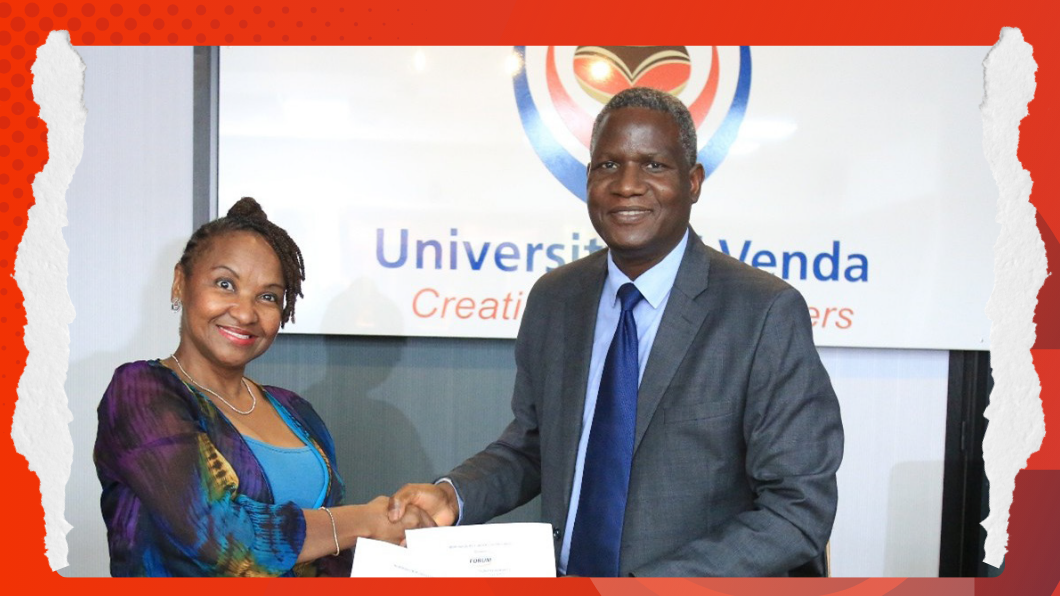
On 6 March 2026, the University of Venda (UNIVEN) signed a five-year Memorandum of Understanding with the African Technology Forum (ATF) at its Council Chambers. The agreement sets a clear direction for what comes next: AI education, research, and innovation that puts African students at the centre.
A Five-Year Plan With Real Targets
This partnership does not live on paper. UNIVEN’s Vice-Chancellor and Principal, Prof Bernard Nthambeleni, made that clear at the signing ceremony. He stressed that the partnership must deliver measurable outcomes and tangible impact. He also confirmed that the university’s executive deans, directors, and deputy vice-chancellor will drive implementation across all faculties.
The agreement aligns directly with UNIVEN’s newly launched Strategy 2026–2030. That strategy places entrepreneurship and innovation at the heart of the university’s mission. Connecting with ATF gives UNIVEN a direct route to put that strategy into action through practical, industry-linked AI programmes.
What ATF Actually Brings to UNIVEN Students
The African Technology Forum is not a new organisation. Students at MIT founded it in 1988 with a single mission to ensure Africans wrote the scientific history of their own continent. Today, ATF runs 30 or more active university chapters across the continent and has built a community of over 15,000 young innovators.
ATF’s model works in three stages. First, the ATF AI School runs a free four-week virtual bootcamp that gives learners foundational AI skills. Second, the ATF AI Challenge invites graduates to form teams, receive mentorship from industry experts, and build real AI solutions to problems in health, agriculture, education, and energy. Third, Demo Days connect top teams directly with over 200 employers, investors, and strategic partners in each participating country. Those connections create real paths to jobs, internships, and funding.
UNIVEN students will now access all three stages. Additionally, ATF will establish a Student Chapter on campus. Prof Natasha Potgieter, Executive Dean of the Faculty of Science, Engineering and Agriculture, confirmed that the chapter would give students across all faculties access to AI mentorship and hands-on innovation in sectors such as healthcare, agriculture, and education.
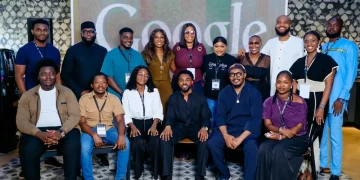
This programme carries serious financial backing. Google.org committed $1 million to ATF to scale the ATF AI Challenge and train over 10,000 young innovators across Ghana, Kenya, Nigeria, and South Africa. UNIVEN’s partnership places its students directly inside that pipeline.
Students in Science, Humanities and Beyond All Qualify
One of the strongest aspects of this partnership is its scope. It does not restrict participation to engineering or computer science students.
Prof Tawanda Runhare, Acting Executive Dean of the Faculty of Humanities, Social Sciences and Education, highlighted the opportunity to blend science, technology, and indigenous African knowledge systems. He noted that technological innovation built on African contexts produces solutions that respond to real societal needs.
ATF’s AI Challenge asks teams to tackle problems in healthcare, agriculture, energy, and education sectors where humanities students, education specialists, and social science researchers bring direct knowledge. A student studying rural development or public health brings something a computer science graduate may not. That cross-faculty approach strengthens the quality of solutions that African students produce.
UNIVEN’s Chief Financial Officer, Mrs Mavis Madzhie, reinforced this during the signing. She described the agreement as a collective commitment to talent development across Africa and emphasised that students would gain meaningful learning experiences well beyond the classroom.
Way forward for African AI
South Africa faces a youth unemployment rate of 62%. Every year, 10 to 12 million young Africans enter the workforce, yet only about 3 million formal jobs become available. AI skills will not solve unemployment on their own, but they create direct pathways into sectors and roles that continue to grow.
The WISE report makes a key point that applies directly here. Institutions that produce results do not simply allow AI adoption to happen informally. They build a strategy around it. They invest in faculty training. They create governance structures. UNIVEN’s five-year plan with ATF, complete with a joint steering committee and measurable outcomes, follows exactly that approach.
ATF South Africa Country Lead, Ms Ntsoaki Mohapi, stated at the ceremony that no student should be left behind in the global AI shift. She expressed confidence that the partnership would ensure African students actively participate in shaping the future of artificial intelligence and digital transformation. That is a practical commitment backed by a structured programme, institutional support, and $1 million in Google.org funding.
Deputy Vice-Chancellor for Research and Postgraduate Studies, Prof Fulufhelo Netswera, closed the ceremony by pointing to the real test ahead. The true success of this MoU, he said, lies in translating the agreement into concrete programmes that generate entrepreneurship, innovation, and technology-driven opportunities for students, researchers, and the wider university community.
UNIVEN and ATF have set the terms. The next five years will show what African students can do with them.