
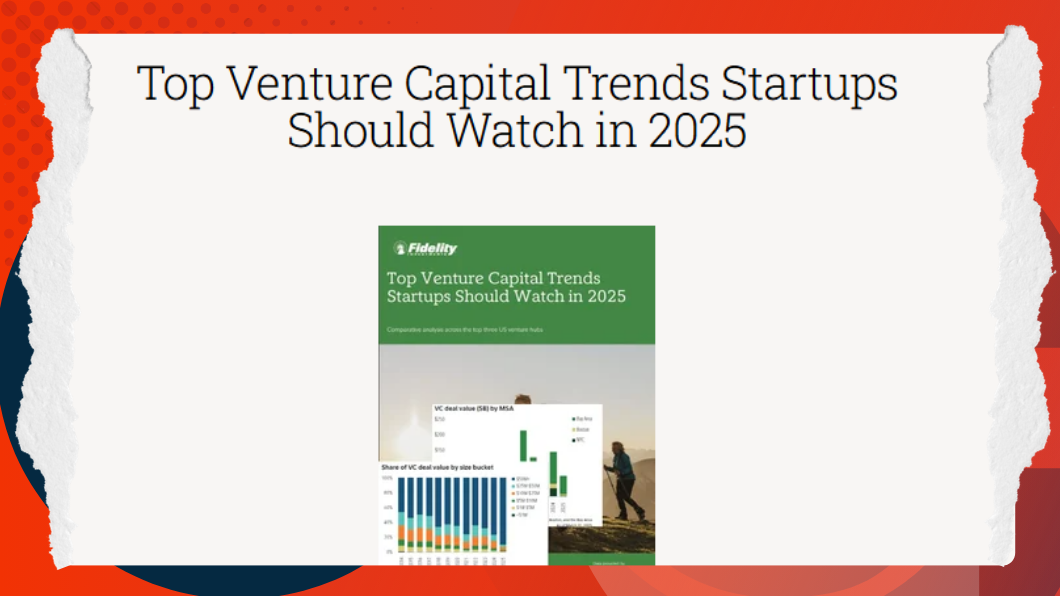
Where founders once closed funding rounds in 12-18 months, they now face a two-year marathon. This is a new reality that’s reshaping how entrepreneurs approach growth, cash flow, and investor relations.

Recent data from the nation’s top three venture hubs reveals that the median time to close a VC round stretched to roughly two years in 2024, compared to just 1.3-1.4 years in 2019. This is a fundamental change that’s forcing startups to rethink their entire approach to business building.
AI Startups Absorb Nearly Half of All Venture Capital
AI companies now capture 46.4% of all US venture capital deal value, despite representing only 28.9% of deal count. This concentration creates an illusion of market health that masks underlying weakness across other sectors.
When researchers removed AI deals from 2024 data, they uncovered that only 10,850 deals closed with $112 billion raised, marking three straight years of decline. The reveals an ecosystem that’s dependent on artificial intelligence hype to sustain growth.
Crunchbase reports that AI-related companies raised $118 billion by mid-August 2025, already surpassing the entire 2024 total of $108 billion. Major rounds like Anthropic’s $13 billion, xAI’s $5.3 billion, and Mistral AI’s $2 billion dominated headlines and skewed overall funding statistics.
Geographic Funding Patterns Create Winners and Losers
The Bay Area has emerged as the undisputed champion of venture activity, driven almost entirely by AI investments. Median deal sizes jumped from $8 million to $10 million year-to-date, while average deals skyrocketed from $49.6 million to $137.2 million.
Meanwhile, New York maintains steady but smaller deal sizes at $5 million median, with averages declining to $14.6 million. Boston sits between these extremes, experiencing moderate recovery focused on its healthcare strengths.
These regional differences reflect sector specialization patterns:
- Bay Area: AI and machine learning dominance
- Boston: Healthcare and biotech leadership
- New York: Fintech, SaaS, and selective AI investments
Startups in Boston and New York have found success by doubling down on regional strengths rather than chasing AI trends. Healthcare companies in Boston show the highest exit probabilities according to PitchBook data, while New York’s fintech and SaaS firms demonstrate sustainable growth through operational discipline.
Megadeals Drive 80% of Total Investment Volume
Deals exceeding $50 million represent just 7.3% of all transactions but account for nearly 80% of capital raised, a percentage that climbed to 89.1% year-to-date in 2025.
This concentration means most startups compete for a shrinking pool of smaller rounds while a select few capture massive investments. KPMG data shows global VC investment reached $120 billion in Q3 2025, representing the fourth consecutive quarter of robust activity driven primarily by megadeals.
The trend toward larger, later-stage investments reflects investor preference for proven companies with clear paths to profitability. Seed and Series A rounds still dominate deal count, but Series B, C, and D+ rounds experienced the strongest year-over-year growth in both deal count and dollar volume.
Extended Fundraising Timelines Demand New Strategies
The shift from 1.3-year to 2-year fundraising cycles forces entrepreneurs to plan differently. Phoenix Strategy Group research indicates founders now need 12-24 months between seed and Series A rounds, with the venture capital scene becoming more selective throughout 2025.
This extended timeline reflects investor caution as firms deploy ageing dry powder more carefully. VCs now prioritize startups with healthy cash flows and defensible competitive advantages over high-growth, high-burn business models that dominated previous cycles.
Successful founders adapt by:
- Extending cash runways through disciplined spending
- Focusing on sustainable growth metrics over vanity metrics
- Building stronger competitive moats before seeking the next rounds
- Demonstrating operational efficiency and a path to profitability
Merger and Acquisition Remains Primary Exit Strategy
Acquisitions and buyouts account for more than 75% of venture exits across New York, Boston, and the Bay Area markets over the past decade.
Median acquisition sizes grew substantially from $45.5 million in 2023 to $112 million in 2024, reaching $192.5 million year-to-date in 2025. This upward trend reflects buyers willingness to pay premium prices for companies with proven business models and clear strategic value.
The rise in acquisition values provides hope for founders building sustainable businesses outside AI’s spotlight. Strategic buyers increasingly value operational excellence, market position, and revenue quality over growth-at-all-costs metrics that defined previous market cycles.
Sector Specialization Trumps Trend Following
The most successful startups focus on regional sector strengths rather than chasing investment trends. Boston’s healthcare ecosystem, New York’s fintech expertise, and Bay Area’s AI concentration each offer distinct advantages for founders willing to commit to long-term sector development.
Deloitte analysis confirms VCs have become more selective, while founders pivot to creative cost-control tactics. This selectivity rewards companies that demonstrate deep sector expertise and sustainable competitive advantages.
Rather than pursuing artificial intelligence opportunities outside their core competencies, successful entrepreneurs double down on sectors where they possess authentic expertise and their regions offer established ecosystems of talent, customers, and support infrastructure.
The Path Forward for Startup Founders
Today’s venture environment demands operational discipline over hype-driven expansion. The most resilient companies focus on sustainable growth, efficient capital deployment, and building genuine value for customers and stakeholders.
Founders must prepare for longer fundraising cycles by maintaining larger cash reserves, demonstrating consistent progress between rounds, and building businesses capable of surviving extended periods without external capital. The companies that thrive will be those that view fundraising as one tool among many rather than the primary measure of success.
The two-year fundraising reality is a permanent shift toward more disciplined venture investing. Entrepreneurs who adapt their strategies accordingly will find themselves better positioned for long-term success in this new environment.
Download the complete venture capital trends report: Top Venture Capital Trends Startups Should Watch in 2025