
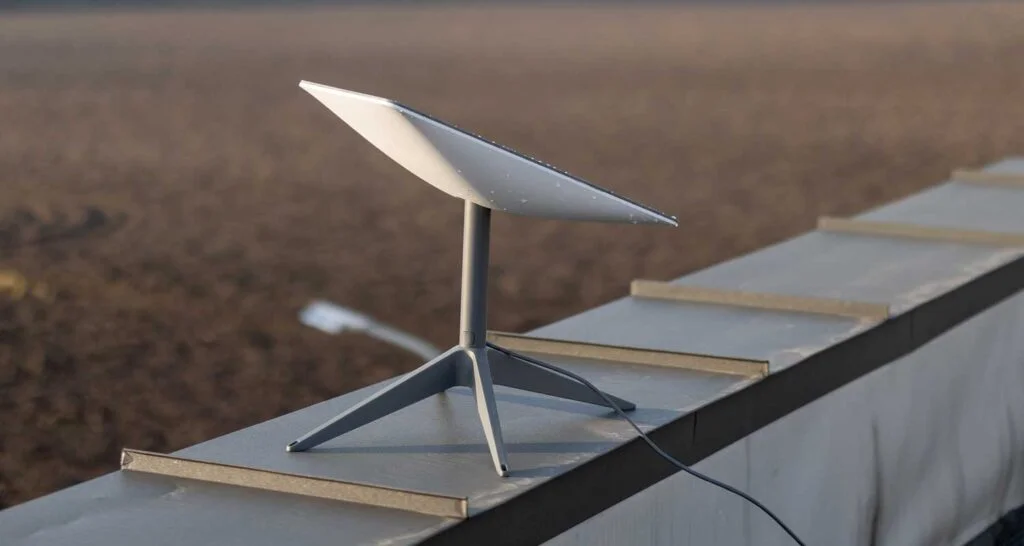
After months of uncertainty, Starlink has resumed new hardware orders in Nigeria. The satellite internet provider, owned by Elon Musk’s SpaceX, had previously paused fresh sign-ups in parts of the country due to capacity constraints. Now, Nigerian customers can once again place orders for new kits directly through the company’s website.

For many households and small businesses, this is significant. Starlink’s entry into the Nigerian market disrupted a broadband space long dominated by fibre, fixed wireless and mobile network operators. Its appeal was its high-speed internet delivered via low-Earth orbit satellites, with no reliance on traditional terrestrial infrastructure.
A Pause Driven by Capacity Pressure
When Starlink first launched in Nigeria, demand was stronger than many expected. Urban centres, particularly Lagos and Abuja, saw rapid uptake. Users drawn by promises of faster speeds and lower latency compared to conventional satellite internet moved quickly to secure terminals.
However, the network’s capacity in certain locations became stretched. Starlink responded by halting new residential orders in high-demand areas. Existing users remained connected, but prospective customers had to join a waitlist.
The decision reflected a broader reality of satellite broadband. Unlike fibre networks that can be expanded city by city, satellite capacity depends on orbital coverage, ground infrastructure and spectrum coordination. Scaling takes time.
Nigeria’s Broadband Gaps Still Create Opportunity
Nigeria remains one of Africa’s largest internet markets, yet broadband penetration is uneven. Fibre coverage is limited outside major cities. Mobile networks provide a wide reach, but speeds and reliability vary depending on location and congestion.
This is where Starlink continues to find opportunity. For rural communities, remote schools, healthcare centres and businesses operating outside urban cores, satellite internet offers a practical alternative. It bypasses the delays and cost of laying fibre across difficult terrain.
Resuming new orders signals confidence that additional capacity has come online or that earlier congestion has eased. Either way, it reopens access for users who have been waiting months to subscribe.
Pricing and Market Realities
Starlink’s pricing remains a major talking point. The upfront hardware cost is significant by Nigerian standards, and the monthly subscription fee places it above many local broadband plans. That has positioned the service as a premium option rather than a mass-market solution.
Yet for customers who depend on stable connectivity for remote work, content creation, fintech operations or international business, the reliability can justify the cost. In areas where alternatives are slow or inconsistent, Starlink becomes less of a luxury and more of a necessity.
The competitive landscape also continues to evolve. Local ISPs are expanding fibre networks, while mobile operators invest in 4G and 5G infrastructure. Starlink’s return to open orders adds fresh pressure across the market.
What This Means Going Forward
The resumption of new orders does not mean Nigeria’s connectivity challenges are solved. Infrastructure gaps remain. Affordability is still a barrier. Regulatory oversight will continue to shape how satellite broadband scales in the country.
But the development does reinforce one point: demand for reliable internet in Nigeria is far from saturated. Users are willing to explore alternatives when traditional options fall short.
For now, Starlink is back in the game for new Nigerian customers. And in a market where connectivity increasingly underpins education, commerce and digital services, that matters.