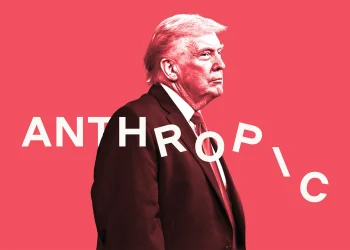
This is going to be my most conspiracy theory self. When a Palantir co-founder and major US defence-linked investor backs a young Nigerian company building security hardware, the story stops being just venture capital. It becomes geopolitics, procurement, legitimacy, and power.

The question Nigeria cannot dodge
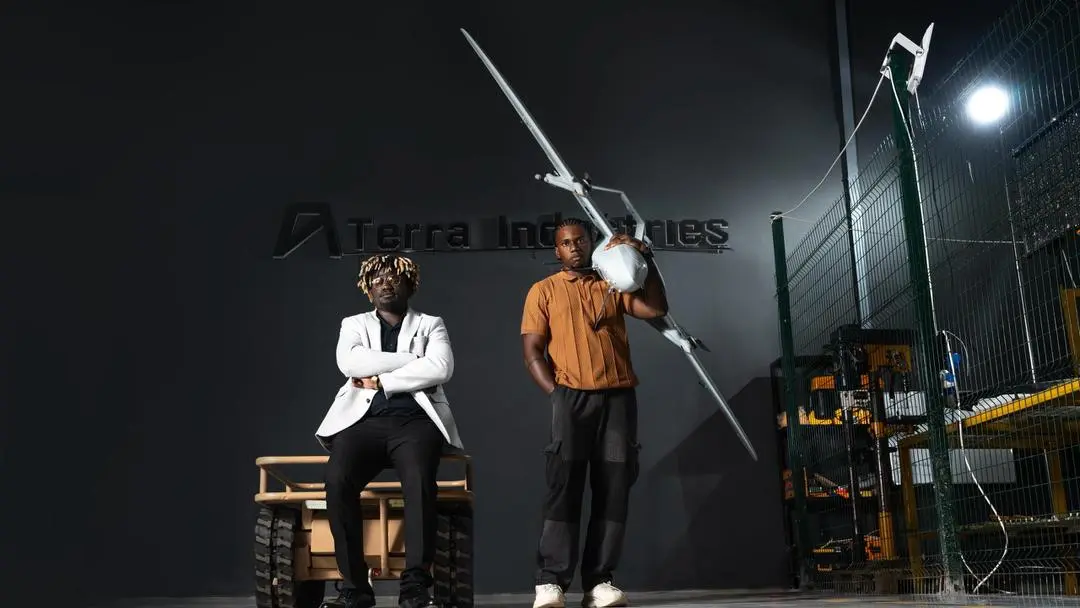
Terra, previously known as Terrahaptix, is not pitching another consumer app. It is building drones, sentry towers, and software that sits inside the most sensitive layer of a state, critical infrastructure, and security response. The company has publicly discussed a $1.2 million contract to protect two hydropower plants using drones and towers, positioning itself as an indigenous alternative in a space Nigeria has often outsourced. It has now announced a much larger funding round, with TechCrunch reporting $11.75 million led by 8VC. Bloomberg also reported the raise and framed it as a Nigerian drone maker backed by Lonsdale’s firm.
So the real debate is not whether Terra is impressive. It is whether Nigeria can allow a private company, with foreign capital and global political fingerprints, to scale in a sector that can be weaponised.
Joe Lonsdale, who he is and why his name sells globally
Joe Lonsdale is a co-founder of Palantir and the founder and managing partner of 8VC. That one line, Palantir co-founder backs Nigerian defence startup, is an easy headline for global media because it plugs into an existing narrative: the Palantir network, the rise of venture-backed defence tech, and the export of American security ideology into new theatres.

This is why his involvement matters. It instantly internationalises Terra. It also instantly politicises Terra.
Borrowing from the US government’s visa policy, examine online presence
The US State Department has expanded “online presence” review for visa applicants, including instructions in several categories to set social media profiles to public to facilitate vetting. The principle is straightforward: in high-trust decisions, public online behaviour is part of the risk profile.
Apply the same logic here. If a foreign investor’s capital and network may shape perception and operating space for a security company inside Nigeria, that investor’s public posture is relevant.
Joe Lonsdale’s X activity and the risk it creates for Terra
On X, Lonsdale has engaged with content that frames Southern Africa through a decline narrative tied to white minority rule nostalgia. In one widely shared example, he responded approvingly to a “then versus now” meme comparing Rhodesia and apartheid era South Africa with a warning about America “coming soon,” adding: “We can take things back the right direction here.”
Whether this is careless engagement, ideological signalling, or rage bait, it becomes reputational fuel in Nigeria. Critics do not need to argue about drones or factories. They can argue about foreign ideology and influence. In a security and infrastructure context, that is enough to trigger political and regulatory pressure.
How much of Nigeria’s defence data will be shared with Palantir
Right now, there is no public evidence of any agreement that gives Palantir access to Nigerian defence data via Terra, and there is no disclosed contract clause or partnership announcement that sets out data sharing with Palantir.
What is public is narrower. 8VC led Terra’s $11.75 million round, and the deal is being read through Lonsdale’s Palantir co-founder identity. Terra’s own announcement and external reporting also state that Alex Moore, a defence partner at 8VC and a Palantir board director, joined Terra’s board.
None of that automatically creates a data pipeline. Under standard commercial reality, Palantir gets zero unless a Nigerian client or Terra explicitly grants access in writing, or unless Terra’s systems are running on Palantir software or services, which has not been stated in the reporting cited above.
This is why Nigeria should stop debating this as speculation and turn it into a clause. For any Terra deployment touching critical infrastructure or security operations, the government should require data residency in Nigeria, prohibit third-party access without written state approval, mandate independent audit rights over data flows and subcontractors, and attach penalties that actually bite for breaches.
Nigeria can ‘try’ to box Terra in without drama
If Nigeria wants to box Terra in, it has levers.
- Aviation and flight permissions: Nigeria’s civil aviation rules cover certification, registration, and operational requirements for remotely piloted aircraft systems.
- Import controls and end user governance: Nigeria’s Office of the National Security Adviser runs an End User Certificate portal for controlled items, including remotely piloted aircraft, tied to security clearance processes.
- Industrial policy gatekeeping: Nigeria has signalled a push toward a stronger domestic defence industrial base through reforms around DICON, with official statements emphasising partnerships and a broader defence industry model.
So yes, Nigeria can kill Terra’s momentum through licensing delays, import friction, procurement exclusion, and compliance burdens.
Nigeria should support Terra, but….
Boxing Terra in outrightly would be strategic self-sabotage if the company is genuinely building indigenous capability and manufacturing. Nigeria’s problem is not a shortage of threats. It is shortage of effective, accountable capacity. If Terra can protect critical infrastructure that has national value.
But support must be conditional, because the same tools that secure hydropower plants can enable surveillance abuse, elite capture, and political intimidation if governance is weak.
Nigeria should support Terra only if it enforces four red lines.
- Licensing discipline: every drone deployment sits inside NCAA approvals, no shortcuts, no special status.
- End user clarity: controlled inputs must be traceable through end user processes, with zero ambiguity about who can buy, deploy, and command the system.
- Procurement transparency: state contracts must be structured to reduce capture, with clear performance metrics, auditing, and termination clauses.
- Data and accountability: Nigeria needs enforceable rules on data retention, access, oversight, and auditability for any deployment touching critical infrastructure.
Support without these conditions is how countries incubate private power that later becomes untouchable.
Now, taking off my conspiracy theorist hat, congratulations to Terra. It is refreshing to see a non-fintech startup in Nigeria raising serious capital to build something physical, difficult, and potentially nationally useful. If Terra can genuinely manufacture, deploy, and maintain reliable security systems at scale, that is industrial progress, not just startup theatre. It is also a signal to the market that African founders can attract global capital for hard problems, not only payments, lending, and commerce.
But this is the part Terra cannot escape. In defence and critical infrastructure, applause is never the finish line. It is the beginning of oversight. Nigeria should support Terra, while writing the rules in ink: strict licensing compliance, clean end-user control, procurement transparency, and absolute clarity on data sovereignty and third-party access. If Terra accepts that bargain and proves it can operate inside hard guardrails, it becomes a national asset. If it resists guardrails or plays the usual Nigerian game of shortcuts and influence, then the same state that should support it will have every reason to shut doors.