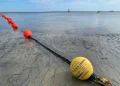
Meta’s 2Africa subsea cable (the largest undersea internet system ever built at 45,000 kilometres) has hit a significant wall. Alcatel Submarine Networks (ASN), the French state-owned contractor responsible for laying the cable, has declared force majeure, stating it can no longer safely operate in the Persian Gulf amid the ongoing Iran conflict. The company’s cable-laying vessel, Ile De Batz, is currently stranded near Dammam, Saudi Arabia, unable to complete its work.

The disruption threatens to delay what was meant to be a landmark moment for African internet connectivity, with the project’s Pearls extension now in limbo at a critical stage of completion.
Where the Project Stands
The 2Africa cable connects 33 countries across three continents, with 46 landing stations. Meta completed the core infrastructure in November 2025, but two segments remain unfinished: a stretch in the Red Sea and the Pearls extension through the Persian Gulf, which was scheduled to go live in 2026.
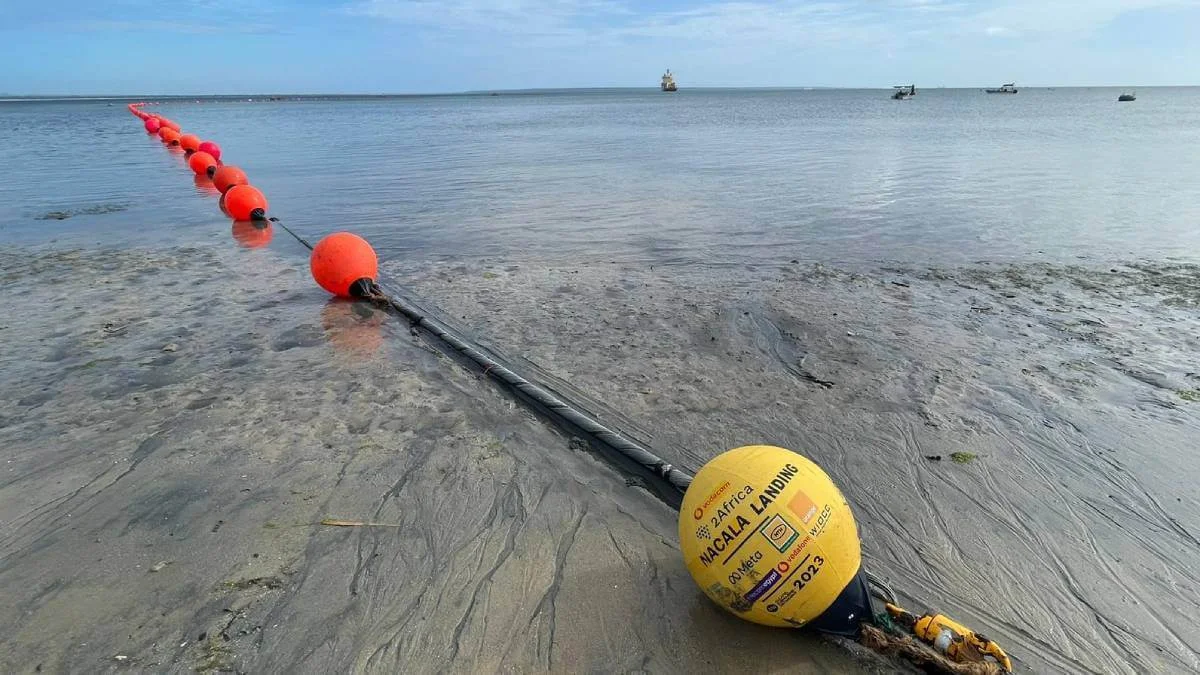
Much of the fibre for the Pearls segment already rests on the seabed. What remains is the final stage connecting the cable to coastal landing points and activating the route. The segment was designed to link landing stations in Oman, the UAE, Qatar, Bahrain, Kuwait, Iraq, Pakistan, India, and Saudi Arabia.
Conflict on Two Fronts
Meta halted work in the Red Sea months ago after Houthi attacks on ships in the area and difficulties obtaining installation permits. Several cables damaged by Houthi strikes in early 2025 were repaired only recently, after months of coordination during which cable ships could not safely access the affected routes.
Now the Persian Gulf faces the same problem. Iran has blocked the Strait of Hormuz following the escalation of the US-Israel military campaign against Iran. With active military operations underway, cable ships have no viable path to continue work. As one industry analyst put it, cable ships will not operate in areas with active military operations. It is simply too risky.
The 2Africa project is not the only casualty. Work on the Sea-Me-We 6 cable, backed by a consortium including the French telecom company Orange, and the FIG project, led by the Qatari firm Ooredoo, have also been paused. Industry experts warn the conflict could also complicate repairs to existing cables already operating in the region, with unexploded ordnance on the seabed posing additional hazards for engineers.
What Africa Stands to Lose
The Red Sea and the Persian Gulf form two of the narrowest corridors in the global subsea network linking Europe, Africa, and Asia. When instability affects both passages simultaneously, the redundancy the system relies on begins to narrow. Traffic continues to move through alternative cables and overland routes, but those paths carry less capacity and longer transmission distances.
The delay is a significant setback for African internet expansion. The 2Africa Pearls extension was central to deepening connectivity between African coastal markets and Asia’s digital economy, a link with direct implications for bandwidth costs, cloud access, and the continent’s growing data centre sector.
Meta’s Longer Game
In response to the deepening vulnerability of existing cable routes, Meta is planning Project Waterworth: a cable designed to connect the US, India, South Africa, and Brazil while bypassing Middle East chokepoints entirely. Despite being announced, the project remains years away from completion.
For now, the Pearls segment sits partially installed and waiting, its activation dependent on conditions beyond the control of any engineer or investor.