Botswana has launched an education reform that puts science, technology, engineering, arts, and mathematics (STEAM) at the heart of its national curriculum. The country announced this during recent partnerships with UNESCO.

The comprehensive STEAM initiative will help to equip Botswana’s learners with critical thinking skills needed for tomorrow’s job market. This comes as the nation seeks to reduce its dependence on diamond mining and build a diversified, knowledge-based economy.
Government Backs STEAM Training with Major Investment
The Ministry of Child Welfare and Basic Education has committed substantial resources to roll out STEAM programs across public schools nationwide. Minister Nono Kgafela-Mokoka announced that the initiative will reach all educational levels, from primary schools to higher education institutions.
“We want to prepare our children for jobs that don’t exist yet,” said Education officials during recent policy briefings. The program focuses on hands-on learning experiences that blend theoretical knowledge with practical applications.
Private sector partners have already begun supporting pilot programs. Stanbic Bank launched STEAM projects at Gabane Primary School in May 2024, demonstrating how financial institutions are backing education reform efforts.
UNESCO Partnership Strengthens Africa-Wide STEAM Push
Botswana’s education transformation aligns with continental efforts to advance STEM learning across Africa. The country participates in UNESCO’s “Transforming STEM in Africa” initiative, which brought together education leaders from across the continent in November 2024.
The partnership provides technical expertise and international best practices to support curriculum development. UNESCO specialists work directly with Botswana’s education officials to design age-appropriate STEAM modules that reflect local contexts while meeting global standards.
This collaborative approach helps Botswana avoid common pitfalls in education reform. The international organization shares lessons learned from successful STEAM implementations in other developing countries.
Smart Technology Integration Transforms Classrooms
The STEAM rollout includes significant technology upgrades to support digital learning. Schools receive interactive whiteboards, computer labs, and high-speed internet connections to enable online resources and virtual collaboration.
Teacher training programs ensure educators can effectively use new tools and teaching methods. The Human Resource Development Council (HRDC) coordinates professional development sessions that focus on innovative instructional techniques.
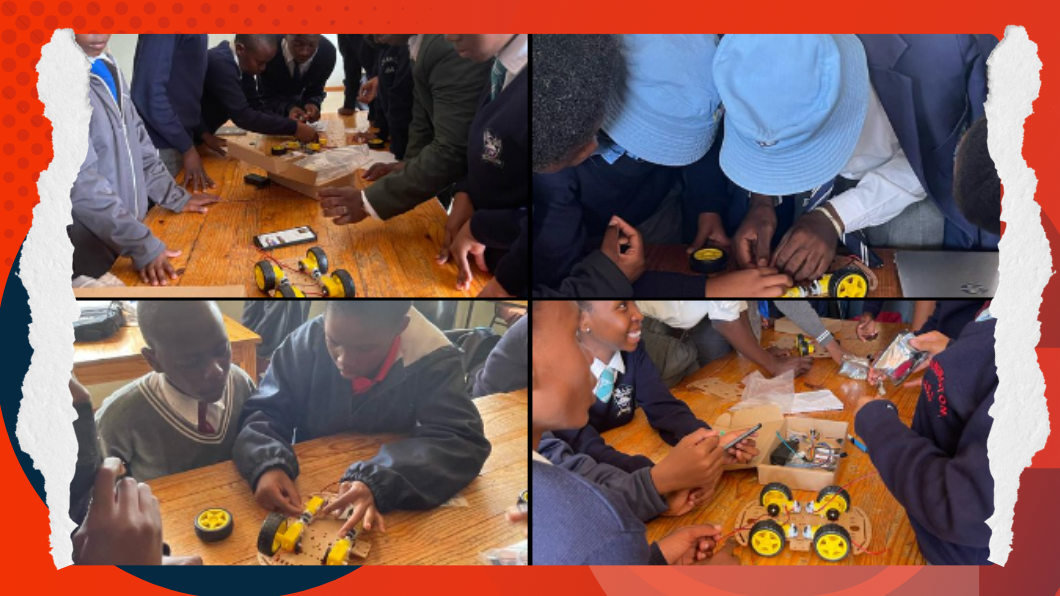
Robotics and coding courses have been introduced at the secondary school level, giving students practical experience with automation and programming. These skills directly address employer needs in Botswana’s growing technology sector.
Innovation Hubs Connect Students with Industry
The Botswana Digital and Innovation Hub (BDIH) serves as a key partner in the STEAM education initiative. Located in Gaborone, the facility provides students with access to cutting-edge technology and mentorship from industry professionals.
Students participate in innovation camps, job shadowing programs, and real-world problem-solving challenges. These experiences help bridge the gap between classroom learning and workplace applications.
The initiative particularly targets female students and learners with disabilities, addressing historical underrepresentation in technical fields. Special programs encourage girls to pursue careers in traditionally male-dominated STEM sectors.
Skills Development Targets Economic Transformation
Botswana’s STEAM push directly supports the government’s economic diversification strategy. The country plans to develop homegrown talent in technology, renewable energy, and advanced manufacturing sectors.
Recent labour market analysis shows growing demand for workers with technical skills, data analysis capabilities, and digital literacy. The STEAM curriculum addresses these needs by emphasizing practical competencies alongside academic knowledge.
The program also preserves local culture by incorporating traditional knowledge systems into modern learning frameworks. Students learn to apply scientific methods to solve community problems while respecting indigenous practices.
Early Results Show Promise for Student Engagement
Initial feedback from pilot schools indicates increased student interest in science and mathematics subjects. Teachers report higher participation rates in technical courses and improved problem-solving abilities among learners.
The Maranyane Bokamoso Programme, implemented in partnership with Debswana Diamond Company, has successfully inspired senior secondary students to consider STEM careers. Participating schools in Matsha, Seepapitso, Moshupu, Goodhope, and Lobatse show measurable improvements in science test scores.
International assessment data suggests Botswana’s education reforms are gaining traction. The country ranks 6th in Africa for education quality, with an 88% literacy rate that provides a strong foundation for advanced STEAM learning.
Challenges Remain in Rural School Implementation
Despite progress in urban areas, rural schools face significant obstacles in adopting STEAM programs. Limited infrastructure, teacher shortages, and connectivity issues slow implementation in remote communities.
The government is addressing these challenges through targeted investment in rural education infrastructure. Plans include mobile technology labs that can serve multiple schools and distance learning programs that connect rural students with expert instructors.
Local leaders work with education officials to ensure STEAM programs reflect community priorities while meeting national standards.
Future Plans Expand STEAM Access Nationwide
The Ministry plans to complete nationwide STEAM rollout by 2027, ensuring all public schools have access to modern science education. This timeline aligns with Botswana’s Vision 2036 development goals.
Advanced programs will introduce artificial intelligence and renewable energy studies at the university level. These specialized tracks prepare graduates for emerging industries that support sustainable development objectives.
International partnerships with countries like India and South Africa provide additional expertise and resource sharing opportunities. These collaborations expand access to advanced training and research facilities for Botswana’s students and educators.