
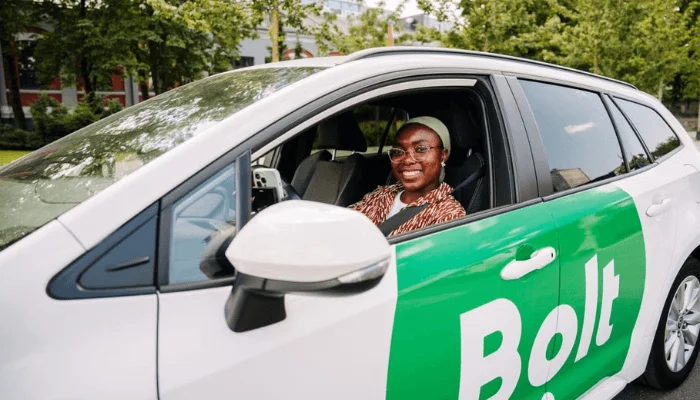
For many users of Bolt, the fare displayed on the app is increasingly becoming a suggestion rather than a fixed price. Across cities in Nigeria, riders report being asked to pay extra before trips even begin, turning what should be a seamless digital experience into a negotiation.

The issue is not isolated. It reflects a deeper imbalance in how ride-hailing platforms price trips, how drivers earn, and how real-world conditions diverge from algorithmic assumptions.
When digital pricing meets analogue realities
Bolt’s fare system is built on predictable variables: distance, estimated time, and demand. But Nigerian roads are anything but predictable. Traffic congestion, poor road infrastructure, and long pickup distances can quickly turn a short trip into a costly one for drivers.
What the algorithm calculates in seconds often fails to capture these nuances. The result is a growing gap between what the app says a trip should cost and what drivers believe it is worth.
For riders, this gap shows up as a familiar request: “add something.” For drivers, it is framed as a necessary adjustment to survive on thin margins.
The economics squeezing drivers
Behind the pricing tension is a harsher economic reality. Drivers bear the full cost of fuel, vehicle maintenance, and, in many cases, daily car hire fees. With fuel prices fluctuating and inflation pushing up operating costs, many say the base fares no longer make sense.
After commissions are deducted by platforms like Bolt, the remaining earnings can feel insufficient, especially for longer or slower trips. In response, some drivers have turned to informal price adjustments as a workaround.
This creates a parallel system: one where official fares exist on the app, but actual prices are determined on the roadside.
A breakdown of platform trust
The practice is more than an inconvenience; it undermines the core promise of ride-hailing. These platforms were built on transparency and predictability, the idea that a rider knows the cost upfront and a driver accepts it by taking the trip.
When that agreement breaks down, trust erodes on both sides. Riders feel pressured or exploited, while drivers feel underpaid and unsupported by the platform.
The situation is further complicated by cash payments, which make it easier to renegotiate fares outside the app’s oversight. In some cases, drivers encourage riders to cancel trips and continue offline, bypassing platform fees entirely.
Weak enforcement, growing normalisation
Although Bolt’s policies prohibit drivers from demanding extra payment without justification, enforcement appears inconsistent. Many riders choose to comply rather than cancel and wait for another car, especially during peak hours or in areas with limited availability.
Over time, what began as occasional behaviour risks becoming normalised. The more riders accept it, the more it spreads, reinforcing a cycle that the platform struggles to control.
A marketplace under strain
At its core, Bolt’s pricing problem reflects a marketplace under strain. The company must balance affordable fares for riders with sustainable earnings for drivers, all while operating in volatile economic conditions.
In markets like Nigeria, that balance is proving difficult to maintain. If fares are too low, drivers push back. If fares rise too high, demand drops. The result is a fragile equilibrium that increasingly spills over into informal negotiations.
The road ahead for ride-hailing
Solving this problem will require more than stricter enforcement. It points to a need for more adaptive pricing models that better reflect local realities, as well as clearer accountability on both sides of the platform.
Until then, the disconnect between app prices and actual fares will remain a defining challenge for Bolt, one that risks weakening user trust in a service built on convenience and certainty.