The global race to build artificial intelligence infrastructure is quietly reshaping consumer hardware. As cloud providers and hyperscalers absorb vast amounts of memory for AI workloads, device makers are being pushed into uncomfortable trade-offs. One result is increasingly visible: new phones, laptops and tablets are shipping with less RAM than their predecessors.

AI Data Centres Are Absorbing the Memory Supply
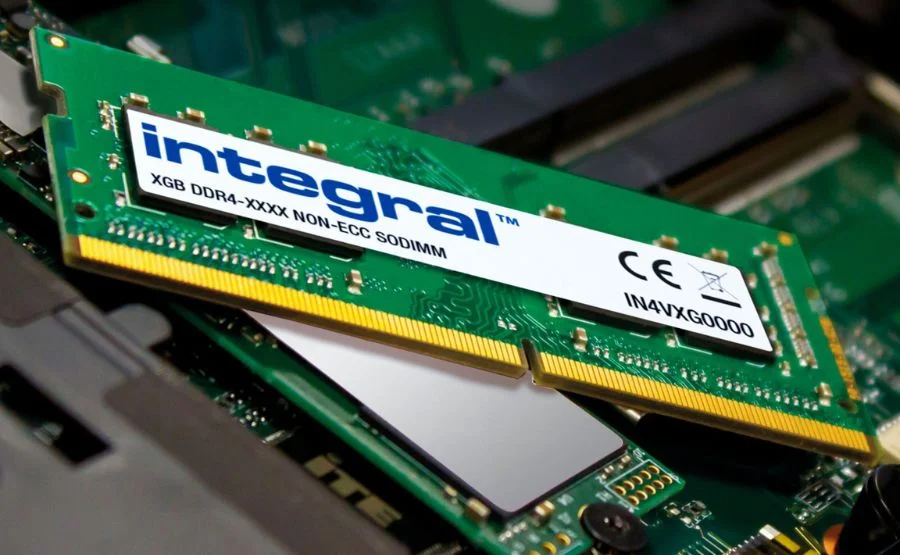
Modern AI systems depend heavily on memory. Training and running large models require enormous quantities of advanced DRAM and high-bandwidth memory. To meet this demand, memory manufacturers are prioritising production for data centres over consumer electronics.
This shift has tightened supply across the broader memory market. Consumer-grade RAM now competes directly with far more lucrative AI infrastructure orders, and it is losing that battle.
Rising Memory Costs Force Design Changes
Prices rise because supply is being tightened. RAM has become one of the fastest-inflating components in device manufacturing. For hardware designers, this creates a dilemma. They can raise prices and risk weaker sales, or they can reduce memory configurations to protect margins.
Many are choosing the second option. Cutting base RAM is a straightforward way to control costs without redesigning entire products.
Lower RAM Becomes a Strategic Compromise
Mid-range laptops that once shipped with 16GB of RAM are increasingly appearing with 8GB as standard. Entry-level smartphones are reverting to smaller memory tiers, holding steady or even decreasing in size, rather than following the upward trend of previous years.
These decisions are not driven by performance complacency. They are responses to a market where memory is scarce, expensive and increasingly reserved for AI infrastructure.
Software Efficiency as a Safety Net
To offset smaller RAM pools, manufacturers are leaning heavily on software optimisation. Operating systems now rely more on memory compression, faster storage and smarter task prioritisation. AI-assisted resource management helps keep devices responsive even with tighter memory limits.
Cloud-based processing also plays a role. By shifting workloads off-device, manufacturers reduce the need for large amounts of local RAM.
The Hidden Cost for Users
For many everyday tasks, reduced RAM may go unnoticed in the short term. However, the impact becomes clearer over time. Background apps are closed more aggressively. Long-term performance may degrade more rapidly as software becomes increasingly demanding.
Power users are likely to feel the change first, especially in productivity-focused laptops and creative workflows.
A Structural Shift, Not a Temporary Blip
This is not a short-term supply shock. AI infrastructure is now a permanent priority for the technology industry. As long as data centres continue to expand and AI models grow larger, memory production will remain skewed toward servers rather than consumer devices.
The result is a quiet rebalancing of expectations. The era of steadily rising RAM in mainstream devices is giving way to one defined by efficiency, optimisation and compromise.