

Paystack season is fully underway. Between announcing profitability, unveiling a new group structure, and outlining its long-term ambitions, the company has given Nigerian tech Twitter exactly what it loves most: material to speculate with confidence and argue about without data.

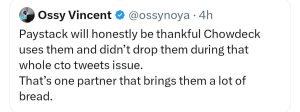
The spark for this particular debate was a tweet from Ossy “Noya” Vincent, a full-stack developer, who suggested that Paystack would be thankful Chowdeck stayed on the platform during a turbulent period and described the food delivery company as a partner that brings in “a lot of bread.” The reaction was immediate. Some people pushed back hard, arguing that Chowdeck is overrated. Others pointed to Jumia, airlines, telcos, betting platforms, and even utility apps as far bigger volume drivers.
Once names like Chowdeck are mentioned, the conversation usually becomes emotional and brand-driven. But Paystack’s merchant rankings are not about vibes or visibility. They are about how money actually moves through the system.
This article takes the debate seriously, expands the analysis, and asks a more grounded question: if you were forced to speculate, where would Chowdeck, SportyBet, PiggyVest, and MTN realistically sit among Paystack’s top merchants?
What “top merchant” really means in payments infrastructure
A top merchant is not the loudest brand or the most tweeted startup. It is defined by a combination of factors that compound over time.
Transaction volume matters, but so does transaction frequency. Average ticket size matters, but so does how often payments happen every day, every week, every month. Reliability requirements matter, because some businesses cannot tolerate even brief payment failures. Channel spread matters too. Merchants that process payments across web, mobile apps, APIs, and virtual accounts stress infrastructure more deeply than single-channel businesses.
When all of this is considered together, some categories naturally rise to the top.
Chowdeck: high frequency, low ceiling
Chowdeck is an important Paystack merchant. It processes a very high number of transactions daily. Food, groceries, and medical supplies delivery is repetitive by nature, and Chowdeck sits in a category where payment reliability is non-negotiable. Failed payments mean delayed meals, angry users, and public backlash.
Chowdeck uses Paystack across web and mobile, relies heavily on card payments and transfers, and operates peak-hour traffic patterns that test payment infrastructure. From a systems perspective, Chowdeck is demanding and valuable.
However, Chowdeck’s business has a structural limitation: basket size. Even at scale, the average Chowdeck transaction is constrained by the cost. This caps total payment value in a way that frequency alone cannot overcome.
Chowdeck is almost certainly a top-tier merchant by transaction count. It is far less likely to be a top-tier merchant by total value processed.
SportyBet: fewer transactions, far more money
If Chowdeck represents frequency, SportyBet represents volume concentration.
Betting platforms process fewer transactions than food and grocery delivery apps, but the total value per user is significantly higher. Users deposit repeatedly, often multiple times a day, and withdrawals introduce additional payment flows. Peak periods around major sporting events create massive spikes in transaction volume within short windows.
SportyBet operates at national scale, serves millions of users, and depends heavily on instant payment confirmation. Any delay or failure directly impacts user trust and revenue. From a payments perspective, betting platforms sit very high on the value chain.
It is highly likely that SportyBet processes more total payment value through Paystack than Chowdeck, even if Chowdeck has more individual transactions.
PiggyVest: slow-looking money that adds up fast
PiggyVest is easy to underestimate because it does not feel transactional in the same way as delivery or betting. But savings platforms are quietly powerful.
PiggyVest processes consistent inflows, scheduled deposits, lump-sum savings, and withdrawals. These are not one-off payments. They are recurring financial commitments tied to user income. Over time, the aggregate value of these flows becomes substantial.
Unlike consumer apps that depend on impulse spending, PiggyVest captures disciplined money. That money moves less visibly, but it moves steadily. From a payments infrastructure standpoint, this creates predictable, long-term value.
PiggyVest is very likely above Chowdeck in total value processed, even if it generates fewer visible daily transactions.
MTN: scale that distorts every comparison
MTN exists in a different category entirely.
Telco apps process airtime purchases, data subscriptions, bill payments, renewals, and add-ons at national scale. Transaction sizes may be small individually, but frequency is extreme. Millions of users transact daily. The cumulative value is enormous.
MTN also operates across multiple channels, including mobile apps and USSD-linked flows, and has strict uptime requirements. Even marginal downtime affects millions of customers simultaneously.
If MTN is a Paystack merchant in a meaningful way, it is almost certainly among the top few by total payment value. Any comparison between MTN and a consumer startup like Chowdeck is structurally unfair.
Where airlines fit into the picture
Airlines deserve separate treatment because they break the frequency rule.
Airline ticket purchases are less frequent, but the ticket size is large. A single transaction can equal dozens of food delivery orders or betting deposits. Airlines also operate across web and mobile, often integrate with third-party booking platforms, and require robust settlement systems.
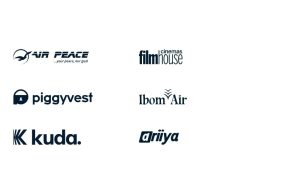
Domestic airlines such as Air Peace and Ibom Air, and cinema and entertainment platforms like Filmhouse, generate fewer transactions but very high value per transaction. These merchants punch above their weight in revenue contribution.
A more realistic speculative top 10, by category strength
Without internal Paystack data, rankings can only be speculative. But using category economics, a more realistic picture might look like this:
- Telcos like MTN
- Airlines and travel platforms
- Betting platforms like SportyBet
- Financial apps and digital banks such as PiggyVest and Kuda
- Large e-commerce platforms like Jumia
- Utility and bill payment platforms
- Streaming, cinema, and ticketing platforms
- Mobility and logistics platforms
- Food delivery platforms like Chowdeck
- Media, SaaS, and subscription platforms
In this framing, Chowdeck is very likely top 10. It is unlikely to be top 5.

Why Chowdeck still matters deeply to Paystack
Being smaller in total value does not make Chowdeck less important.
Chowdeck is a stress merchant. It tests Paystack’s ability to handle high-frequency consumer payments, peak-hour spikes, refunds, and real-time confirmations. These are exactly the merchants that expose weaknesses in payment systems.
From an infrastructure perspective, they are invaluable. From a revenue ranking perspective, they are rarely at the top.
Both things can be true at the same time.
The real Paystack story people are missing
The most important takeaway is not where Chowdeck ranks. It is that Paystack now supports so many fundamentally different types of businesses that ranking individual merchants has become almost meaningless.
Paystack supports card payments, bank transfers, virtual accounts with instant settlement, multiple connectors, and full web and mobile integrations. That is why airlines, telcos, betting platforms, fintech apps, food delivery companies, and savings platforms can all coexist on the same rails.
No single merchant defines the platform anymore.
That diversity, more than any tweet or speculation, is what explains Paystack’s profitability.