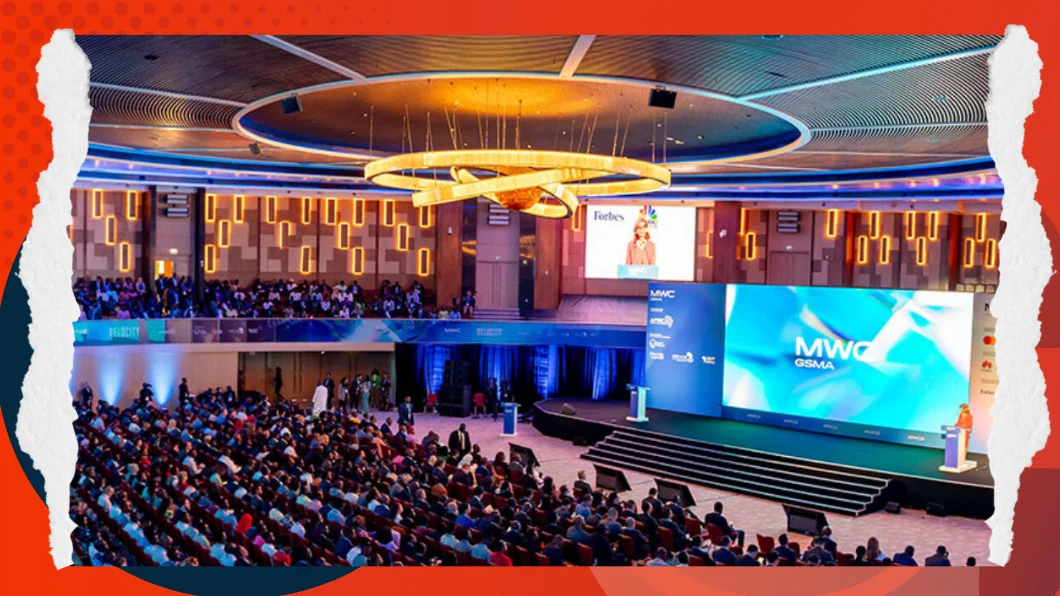
At this year’s Mobile World Congress (MWC) Kigali, the question wasn’t whether Africa is connected. It was what the continent plans to do with that connection.

Artificial intelligence and fintech dominated the three-day summit, which brought together more than 4000 delegates from 109 countries in Rwanda’s capital from 21–23 October. The event highlights that Africa’s digital conversation has moved beyond towers and bandwidth to how data, intelligence, and finance can shape everyday life.
Angela Wamola, Head of Africa at the GSMA, summed it up neatly.
“This year’s event switches gears beyond counting connections and coverage to delivering the connectivity, skills and innovation which confronts the challenges still ahead, and accelerates Africa’s growth for decades to come.”
But while optimism filled the halls, so did questions about execution. Everyone agreed that AI will transform Africa’s fintech scene. Fewer could explain how soon that future might arrive, or who will build it.
Why Fintech and AI Took Centre Stage
The Fintech & Commerce Summit explored digital identity, Insurtech, APIs, regulation, and data privacy. Speakers argued that fintech is no longer just about payments but about ecosystems that can learn from data.
Meanwhile, the AI Summit projected that AI could double Africa’s GDP growth rate by 2035. Yet amid the optimism came caution. Vivek Badrinath, Director General of the GSMA, reminded delegates that most of the continent’s voices are still missing online.
“In Africa, there are over 2000 languages, but they make up only 0.02 percent of online content. If models are trained only by those who are connected, how will they be relevant for the unconnected?”
His warning underscored the summit’s main point, that Africa cannot import AI wholesale. To make fintech truly intelligent, it needs systems trained on local data, languages, and behaviour.
What the Event Revealed
Many sessions circled the problem of how fintech growth can survive its next phase without smarter infrastructure behind it.
At the Fintech & Commerce Summit, speakers discussed how AI is already reshaping financial services, from predictive credit scoring to automated insurance claims and multilingual chatbots for customer support.
Rwanda’s Esther Kunda, Director General of Innovation & Emerging Technologies, added a dose of realism.
“Africa is where we leapfrog, but you have to create the urgency to do this.”
Panels on AI ethics, digital inclusion, and data governance filled the agenda. The GSMA also renewed its Handset Affordability Coalition, aimed at reducing the cost of entry-level 4G smartphones. This is a reminder that access still underpins innovation. The more affordable the devices, the wider the audience for fintech and AI-driven tools.
From Connectivity to Intelligence
For years, Africa’s digital success was measured by how many people got online. At Kigali, that metric changed. The focus is now shifting to what those connections can do.
Fintech sits at the centre of this evolution. Digital wallets, mobile-money systems, and payment data now provide the raw material for machine-learning models that can predict creditworthiness, detect fraud, and personalise services. But Africa’s data remains fragmented, locked in silos across telcos, banks, and government registries. Without shared data frameworks, AI progress will remain uneven.
As Badrinath warned, if Africa doesn’t own its training data, its AI will never speak its language. Rwanda continues to set the policy pace, but much of the continent still lacks coordinated AI governance and data-protection laws. Until that gap closes, the promise of fintech intelligence will stay largely aspirational.
What Happens Next
MWC Kigali 2025 made it clear that fintech and AI are now Africa’s next frontier. What remains uncertain is how that transformation will unfold.
Governments need to convert speeches into regulation, establishing clear rules for AI, open data, and consumer protection. Investors must back long-term infrastructure rather than short-term apps. And developers need access to regional datasets and languages that reflect real African markets.
The optimism from Kigali was genuine and Africa’s digital economy has entered a new chapter, one defined by how intelligently people’s connections are used.