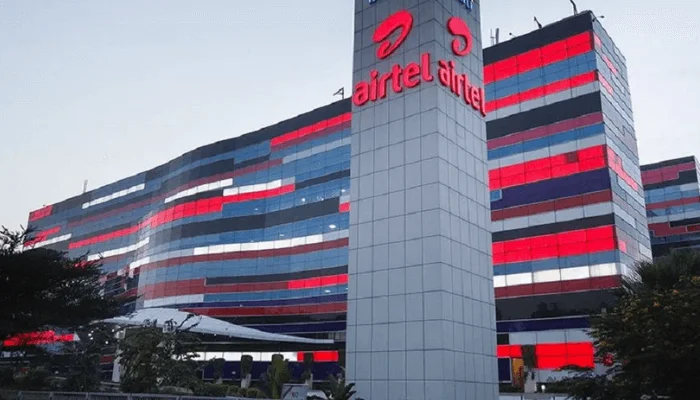
Airtel crossed 650 million customers globally in early April 2026, a milestone that, according to GSMA Intelligence, makes it the world’s second-largest telecom operator by subscriber base, trailing only China Mobile. The achievement is being celebrated as a triumph of scale across two of the world’s fastest-growing mobile markets: India and Africa. But for the continent, the story is more than a headline number.

179 Million Reasons Africa Matters
In Africa alone, Airtel boasts 179 million telecom subscribers across 14 markets, offering mobile voice, data, and international roaming services. That is a significant anchor in a global total that also includes over 368 million mobile users in India. While India supplies the larger slice of the subscriber pie, Africa increasingly supplies the strategic logic, a youthful, mobile-first population with a growing appetite for data and financial services, and significant room for expansion still ahead.
The milestone places Airtel ahead of Reliance Jio on the global stage. Jio, which operates only in India, reported 500 million subscribers last year. Airtel’s dual-continent model gives it a structural advantage no Indian-only operator can replicate.
Airtel Money: The Continent’s Quiet Engine
Connectivity numbers alone don’t capture what Airtel is building in Africa. The more compelling story is financial infrastructure. Central to its offerings in the region is Airtel Money, accessible via Smartcash PSB in Nigeria. The service promotes financial inclusion, serving over 52 million customers and enabling banking and instant payment solutions for individuals who were previously unbanked. The mobile money segment has shown impressive growth, now accounting for 21.1% of Airtel Africa’s total revenue.
Airtel Money processed over $210 billion in transactions in Q3 2025, recording 36% year-on-year growth in transaction value. These are not marginal fintech numbers. They reflect a platform that has quietly become a significant piece of financial infrastructure across markets where traditional banking remains inaccessible to large portions of the population.
Nigeria: Expanding the Network, Facing the Critics
Nigeria (Airtel Africa’s most strategically important market) tells a more layered story. Over the past three years, Airtel has increased its number of sites in Nigeria from about 13,000 to nearly 17,200, with more than 1,500 new sites added in the last year alone to improve service quality and reach more areas.
Yet infrastructure investment hasn’t fully translated into subscriber satisfaction. Many Nigerians still complain about poor network quality, including dropped calls and slow internet speeds. The NCC recently ordered telecom companies to compensate customers in areas where service quality falls below required standards. The regulator’s intervention reflects a wider tension in Nigeria’s telecom sector: operators are growing revenues and user bases, but the quality of experience has not kept pace.
On the competitive side, MTN recorded ₦2.8 trillion in data revenue for 2025, while Airtel posted ₦838.6 billion within the same period, a gap that underscores how much ground Airtel Nigeria still needs to cover against its dominant rival.
What the Milestone Actually Signals
Airtel’s response to reaching 650 million users has been predictably cautious. Gopal Vittal, Executive Vice Chairman of Bharti Airtel, said the company will continue to push innovation and reliability, noting Airtel was the first to launch 5G services in India. On the continent, the technology bet is different. Airtel is investing in satellite-based connectivity through partnerships with Eutelsat, OneWeb and SpaceX, targeting broadband access in remote and underserved areas.
The 650 million milestone is a statement about scale. But scale is only valuable if it translates into service quality, deeper financial inclusion, and infrastructure that actually reaches the people it’s meant to serve.