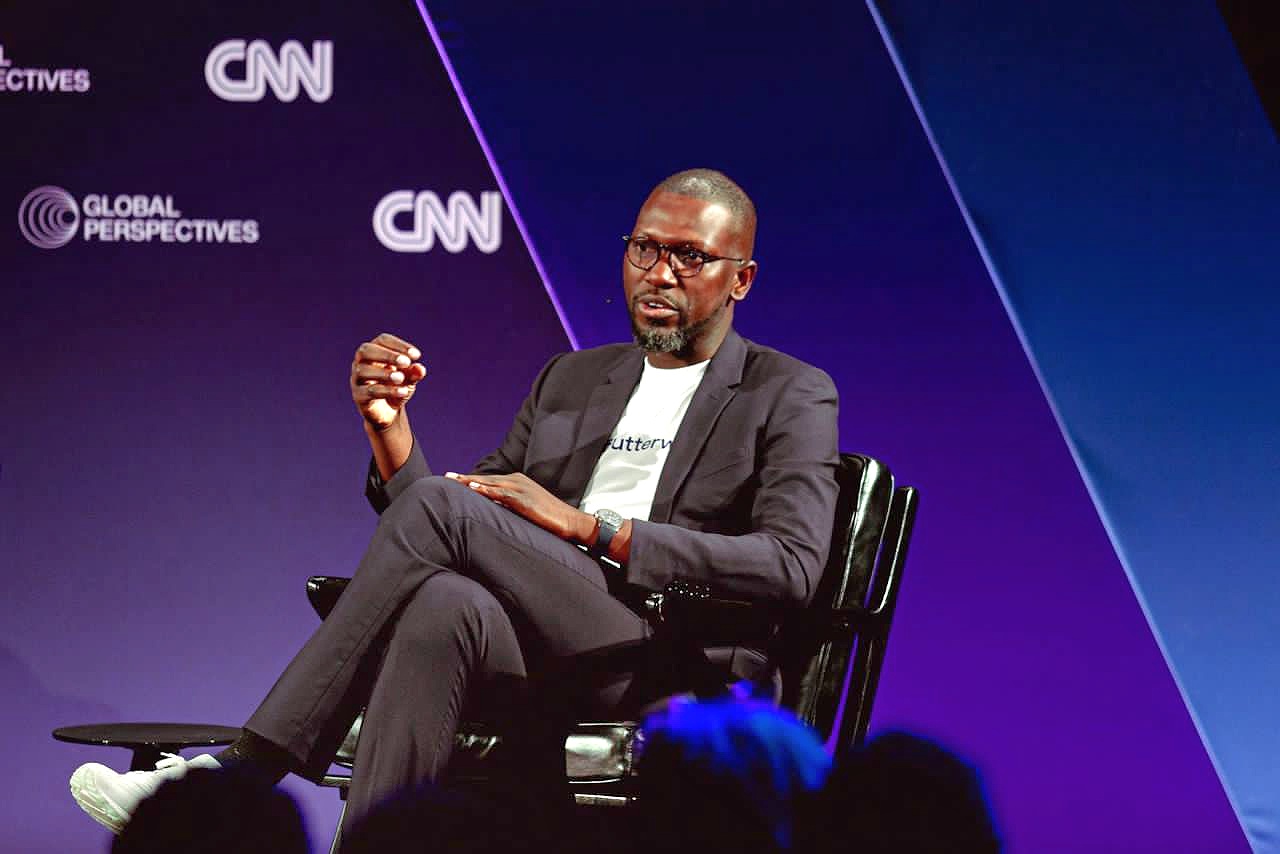
Today, 2 April 2026, Flutterwave has confirmed it has secured a Microfinance Bank licence in Nigeria from the Central Bank of Nigeria. To be precise about what that means: this is not a full commercial banking charter. It is an MFB licence, the instrument through which the CBN permits an institution to accept deposits, extend loans, and conduct domestic funds transfers with Nigerian customers. Flutterwave’s licence is almost certainly at the National tier, which is the highest MFB classification, covering operations across all 36 states and the FCT. That tier carries a minimum paid-up capital requirement of ₦5 billion.

The rights the licence grants are substantive: Flutterwave can now legally hold customer deposits, issue loans and credit facilities, conduct domestic funds transfers, offer micro leasing and hire purchase arrangements, provide guarantees for customers, and participate in CBN intervention funds. It can also offer professional financial advisory services to small businesses and provide technical assistance and training to microenterprises. These are not marginal additions. They are the functions that have been structurally unavailable to a payments company operating under a switching and processing licence alone.

The constraints are equally worth naming. An MFB licence prohibits the holder from purchasing or selling foreign currency or remitting funds internationally. For a company whose founding mission is cross-border payments and whose two million business customers include companies moving money across currencies and continents, those restrictions define the exact boundary between what this licence enables and what it does not. Flutterwave’s switching and processing licence, which it has held since 2022, covers the international and foreign currency layer. The MFB licence covers the domestic deposit-taking and lending layer. Both together constitute a materially different regulatory position from either alone.
The company that started as a payments API stitching together fragmented African rails has now added the authority to hold the money it moves. Over one billion transactions processed. Over $40 billion in value moved. More than two million businesses served across a network connecting Africa to the world. And now, a seat at the table it has been building furniture for since 2016.
From the Rails Into the Room
A payments company, however well-capitalised and well-licenced, operates on top of the banking system. It depends on correspondent banks for settlement. It cannot hold deposits in its own right. It cannot offer credit from its own balance sheet with the structural efficiency of a licensed institution. It cannot control the full end-to-end experience when money must pass through third-party banking infrastructure at critical junctures.
An MFB licence rewrites those constraints on the domestic side of the business.
In the announcement, Gbenga Agboola, GB, described the shift plainly: from enabling transactions to managing them end to end, from relying on external infrastructure to building with control over how money moves, settles, and is accessed.
The practical implications span five distinct user segments. Consumer users on SendApp will gain full account functionality: proper account numbers, instant settlement, Tap to Pay, multi-wallet management, the complete banking experience inside the app they already use. Small businesses, of which over two million already use Flutterwave to accept payments, will be able to run their entire financial operation from one platform, covering accounts, payroll, payouts, multi-currency, and mass disbursements. Enterprise clients get treasury, liquidity management, and API-level integration into their internal financial systems. Developers can build directly on Flutterwave’s banking infrastructure. Platforms and marketplaces can automate revenue splits, create sub-accounts, and embed financial services without constructing any of it themselves.
The credit product cuts across all of it. Working capital loans, merchant financing, and short-term credit underwritten not by paper applications or opaque bureau scoring, but by real-time transaction data that Flutterwave has been accumulating for a decade. When you can lend against cash flows you can see in full, you eliminate the information asymmetry that has kept most African small businesses locked out of formal credit for generations. That single product, quietly announced in the same paragraph as treasury accounts and savings tools, may prove to be the most consequential thing in this entire announcement. Worth noting: given the MFB loan-size restriction, the working capital product will be structured within that ₦500,000-per-transaction threshold for the majority of its book, which actually aligns well with the SME segment Flutterwave predominantly serves.
SendApp: From Barter to a Full Bank in Your Pocket
Before it was SendApp, it was Barter. Flutterwave launched Barter around 2018 as a consumer-facing product that let users create virtual dollar cards, pay international subscriptions, and move money across borders without the friction of traditional bank transfers. It was a practical solution for a generation of Nigerians who needed to pay Netflix, run dollar-denominated businesses, or receive payments from international clients without owning a foreign currency account in any meaningful sense.
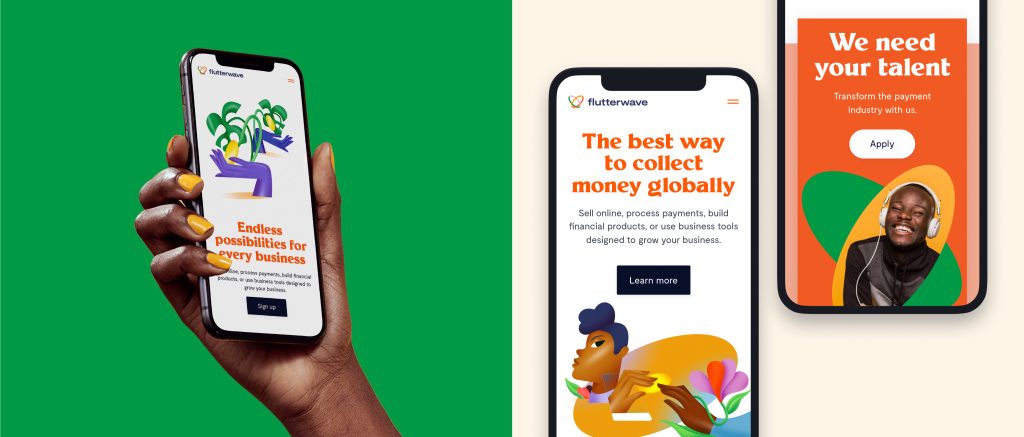
Barter was rebranded to SendApp in late 2021, with Wizkid brought in as brand ambassador, reflecting a sharper focus on cross-border transfers and remittances at scale. Over one million users adopted it in that capacity.
With the MFB licence, the product evolves again, and this time the evolution is foundational. SendApp becomes a full consumer banking application on the domestic side. The user base that signed up to send money across borders will now be able to hold a Nigerian bank account, receive payments locally, pay businesses, manage multiple wallets, and access credit, all without switching platforms or onboarding to a new product. The journey from a dollar card workaround to a deposit-taking licensed bank product, inside a single application, across roughly eight years, is a product arc that very few African technology companies have executed.
Mono: The Acquisition That Makes the Credit Play Work
In January 2026, Flutterwave acquired Mono, Nigeria’s leading open banking infrastructure provider, in an all-stock deal valued at between $25 million and $40 million. Founded in 2020, Mono has built Africa’s most widely adopted open banking infrastructure, with an API platform that enables businesses to securely access bank data, initiate payments, and verify customer identities.
Mono addresses the lack of standardised access to bank data across African markets, where credit bureaus remain limited and fintechs, especially lenders, often rely on customers’ bank transaction histories to assess creditworthiness. According to CEO Abdulhamid Hassan, nearly all Nigerian digital lenders now rely on Mono’s infrastructure, with the company having powered more than 8 million bank account linkages, covering roughly 12% of Nigeria’s banked population, and having delivered 100 billion financial data points to lending companies.

Mono’s product stack covers financial data access through its Connect API, which retrieves a customer’s bank transaction history with consent; DirectPay, which enables account-to-account payments without card rails; Mono Sweep, a recently launched product; and a Lookup product for real-time account and identity verification. Following the acquisition, Mono has also announced plans to launch a treasury management platform in 2026 that will allow enterprises to manage all their bank balances in one place, opening up its existing infrastructure as a platform-as-a-service product.
The acquisition is directly relevant to the credit ambitions at the centre of Flutterwave’s banking announcement. With Mono inside its stack, Flutterwave can now offer onboarding and identity checks, bank account verification, data-driven risk assessment, and one-time or recurring bank payments within a single infrastructure layer. A merchant who accepts payments via Flutterwave but also holds accounts at Zenith and GTBank can, through Mono’s open banking connectivity, present a complete financial picture across institutions that makes credit decisioning faster and more accurate than anything based on collateral or static bureau scores alone.
Flutterwave has also signalled that the Mono acquisition is a key part of its stablecoin strategy, noting that Mono’s open banking and identity infrastructure strengthens the on-ramps and off-ramps needed for stablecoin rails to interact reliably with the real economy. Flutterwave has already validated live end-to-end stablecoin flows between NGN and USD and announced a multi-year partnership with Polygon Labs for stablecoin payment infrastructure across more than 30 African markets. The MFB licence, the Mono acquisition, and the stablecoin infrastructure push are three parts of the same long-term architecture.
The Access Bank Thread
Before there was Flutterwave, there was a payments team inside Access Bank. That team was GB’s. And the man who gave him the room to build it, who saw something in a technically gifted Nigerian engineer and said yes, this is what the bank needs, was Herbert Wigwe.
Wigwe became Group Managing Director of Access Bank in 2014 and spent a decade transforming it from a mid-tier Nigerian lender into one of the continent’s most aggressive financial institutions. He was acquisitive, strategic, relentless, a builder who chased pan-African scale when most Nigerian bank chiefs were still thinking in Lagos coordinates. He believed in people. He believed in GB.
The direct line between Wigwe’s mentorship, GB’s formation inside Access Bank, and the architecture of Flutterwave is not speculative. GB has spoken about it. Access Bank was where he saw, at close quarters, what it meant to operate financial infrastructure at scale, and where he identified the exact gap that Flutterwave would fill. The bank’s technology was powerful. The ecosystem around it was broken. Settlement was slow. Cross-border movement was a patchwork held together by workarounds.
Flutterwave was born from that frustration, shaped in part by the institutional confidence that Wigwe helped build: the belief that a Nigerian could solve an African problem at a global standard.
On 9 February 2024, Herbert Wigwe died in a helicopter crash over the Californian desert, alongside his wife, his son, and the Chief of Staff of the Nigerian Exchange Group. He was 57. He did not live to see the company that grew from his bank’s ecosystem become a bank itself. That is a weight this announcement carries, and it should be named.
The Fintechs That Became the Thing They Disrupted
In the African context, what Flutterwave has just done is dramatic. In global terms, it follows a pattern that is becoming almost predictable. The most consequential fintech companies, once they reach sufficient scale, do not remain fintechs. They become banks, or they become something that functions like a bank in every way that matters and they acquire the licence to confirm it formally.
Before examining the global cases, it is worth noting that within Nigeria itself, several players were already on this path before Flutterwave formalised the journey. Paystack, the Stripe-owned payments infrastructure company, entered Nigeria’s banking sector in January 2026 by acquiring Ladder Microfinance Bank, giving it a banking layer over a decade of payments infrastructure. The newly renamed Paystack MFB plans to lend to businesses first, offer banking-as-a-service products, and provide treasury management, using the same transactional data advantage that Flutterwave is now deploying. Moniepoint and Opay, both of which have built enormous agent-banking footprints serving millions of Nigerians, received upgraded national operating licences from the CBN in January 2026, formalising nationwide operations that had already outgrown their original regional licence scope. Opay, with over 30 million registered users and one of the widest agent networks in the country, and Moniepoint, which has become the payments and POS infrastructure of choice for millions of Nigerian small businesses, are now both regulated at the same national tier. The direction of travel in Nigerian fintech was already clear before today’s announcement. Flutterwave has simply taken it furthest.
PayPal was the earliest global proof. It spent its first decade as a payment facilitator, a layer sitting on top of the banking system that made digital commerce possible in ways that incumbent infrastructure could not. By the mid-2010s it had hundreds of millions of users, a credit product, a debit card, and the operational profile of a financial institution. It holds a banking licence in Luxembourg for its European operations and has never formally pursued a US banking charter, but its functional equivalence to one is not seriously disputed. The licence formalised what the scale had already made true.
Square, now Block, followed a sharper trajectory. Jack Dorsey’s company began as a card reader for small merchants. It became a business banking platform, then launched Cash App, which became one of the most widely used consumer financial products in America, covering debit cards, direct deposit, equity investing, and peer-to-peer transfers. In 2021, Block acquired Afterpay for approximately $29 billion, adding buy-now-pay-later credit to the stack. It now holds banking licences in the United States. The card reader became a bank. The journey took roughly twelve years.
Revolut’s trajectory is arguably the closest structural analogue to what Flutterwave is doing now. Founded in 2015 in London as a multi-currency travel card with interbank exchange rates, it expanded progressively into cryptocurrency trading, equity investing, savings vaults, insurance, and premium subscription tiers. The UK banking licence was rejected multiple times before finally being granted in July 2024, nearly a decade after the company’s founding. The licence unlocked deposit protection under the Financial Services Compensation Scheme and the ability to offer fully protected current accounts. Revolut is now valued at approximately $45 billion. The banking licence was not a milestone on the journey. It was the inflection point.
Nubank illuminates the same dynamic from a different angle. It launched in Brazil in 2013 with a single no-fee credit card and a mission to dismantle the bureaucracy of Brazilian banking. It operated under a credit card company licence initially. It acquired its full banking licence in 2018, which unlocked a current account product, a new tier of customer engagement, and ultimately a path to becoming the largest digital bank in the world by customer count, surpassing 100 million users by 2024. Its 2021 New York IPO valued it at approximately $41 billion. The banking licence was the architectural decision that made everything after it possible.
China offers a more cautionary version of the same story. Alipay, launched in 2004 as an escrow service for Alibaba transactions, and WeChat Pay, launched in 2013 as a social payment feature, both evolved into full-spectrum financial platforms offering savings products, credit scoring, insurance, and investment instruments. By 2020, Ant Group, Alipay’s parent, had grown so large that it was functioning as a systemically important financial institution without being regulated as one. The Chinese government halted its IPO and forced a structural reorganisation. The lesson runs both ways: at sufficient scale, a fintech will be treated as a bank regardless of its licence status. The question is whether the company gets to choose the terms of that reclassification or has it imposed.
Stripe, valued at approximately $70 billion in recent secondary market transactions, has taken a more deliberate infrastructure-first approach. It holds a banking licence through its European subsidiary but has not pursued the consumer banking model. Instead it has built Stripe Treasury, banking-as-a-service for platforms, and Stripe Capital for lending, positioning itself closer to the wholesale banking model than the retail one. The thesis is to be the infrastructure on which other companies build financial services. A different application of the same logic: once you have the rails, you can either ride them or rent them out.
What the global pattern shows, taken together, is consistent. A payment company that reaches sufficient scale accumulates a data advantage, a trust relationship with its users, and a distribution network that incumbent banks cannot replicate organically. At that point, the question is not whether to become a bank. The question is in which direction and how fast.
What Is Different About Flutterwave’s Version
The global comparisons are instructive. They must not obscure what is structurally specific about Flutterwave’s position.
Nigeria is not Brazil. It is not the United Kingdom. It is not the United States. It is a market of over 220 million people, the largest economy on the continent by nominal GDP, with a formal banking penetration rate that regulators have spent years trying to move and a dollar-naira volatility that makes foreign exchange not merely a financial instrument but a daily operational problem for businesses of every size. It is also a market where power instability, connectivity gaps, and regulatory unpredictability have historically made fintech more fragile than its counterparts in more stable environments.
Flutterwave has built its business through that fragility. The billion transactions it has processed were not processed in controlled conditions. They were processed through fuel crises, currency devaluations, regulatory uncertainty, and a global pandemic. That operational experience is not transferable from a textbook.
The credit product, specifically, represents something that no incumbent Nigerian bank has managed to do cleanly and at scale: underwrite small business lending using real-time cash flow data rather than collateral or credit bureau scores. The transaction data Flutterwave holds, covering frequency, volume, seasonality, customer diversity, and cross-border exposure, is more predictive of a small business’s creditworthiness than any static bureau report. With Mono’s open banking layer now inside the same stack, the credit underwriting capability Flutterwave can build draws on a customer’s full financial picture across institutions, not just the slice visible through Flutterwave’s own rails.
The Unfinished Questions
An MFB licence is a starting position in a considerably harder game.
Capital adequacy requirements are materially more demanding than under a payments licence. Regulatory scrutiny intensifies across every function, covering board composition, risk frameworks, internal audit standards, and consumer protection obligations. Flutterwave has pre-empted some of this, citing its PCI DSS Level 1 certification, SOC 1 and SOC 2 compliance, real-time monitoring infrastructure, and advanced fraud detection. These are credible foundations. But compliance infrastructure for a payments company and compliance infrastructure for a deposit-taking institution are not the same thing, and the transition will be stress-tested publicly before it is considered settled.
There is also the question of consumer trust at the deposit level. Two million businesses trust Flutterwave to move their money. Trusting a company to hold your money is a different psychological contract, and in a market where bank failures have left lasting institutional scars, deposit confidence is not automatic. It is built slowly, through visible reliability, over time.
The MFB restrictions are also worth watching. The foreign currency prohibition and the loan-size ceiling mean that as Flutterwave grows its lending book, the commercial banking licence question will eventually resurface. An MFB is where this chapter starts for Flutterwave’s banking ambitions. It is not necessarily where it ends.
The competitive landscape is not passive. Zenith, GTBank, and Access Bank have all invested heavily in their own digital products. Moniepoint and Opay, now operating under national licences, are competing aggressively for the same SME and consumer segments Flutterwave is formally entering. Paystack MFB has entered the lending space using the same data-underwriting thesis. Kuda, PalmPay, and FairMoney occupy adjacent territory. The MFB licence gives Flutterwave structural parity with those players and a technology and data advantage over most of them. It does not guarantee market share.
The Verdict
Flutterwave’s MFB licence belongs in the same conversation as Nubank’s licence acquisition in 2018 and Revolut’s in 2024: evidence that the most consequential financial institutions of the next twenty years will not emerge from central bank boardrooms. They will emerge from engineering teams that understood, before anyone else did, where the friction in the system actually lived.
GB and his team understood that. They built the infrastructure. They earned the trust. They processed the transactions that gave them the data. They acquired the open banking layer that makes the data more complete. They now hold the licence that gives them the authority to do something with all of it that no payment company, however well-built, could do from outside the core.
Herbert Wigwe placed a bet on GB before the market had the vocabulary to describe what GB was building. The decade of Flutterwave was the proof of that bet. The MFB licence is its institutional echo.
The work continues. And by all evidence, it continues well.