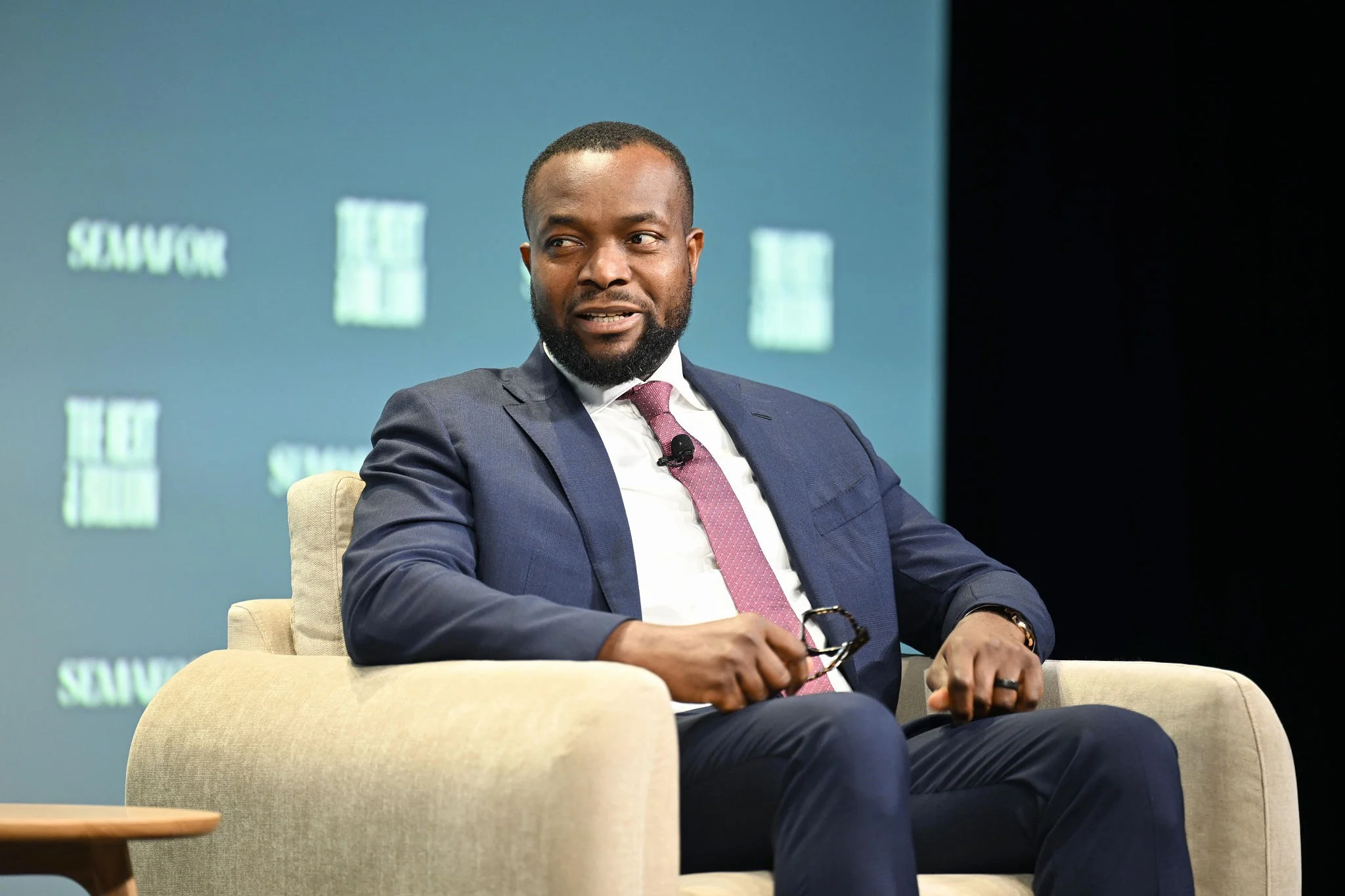
Nigeria has secured $126 million in European financing for Project BRIDGE, its national fibre-optic infrastructure initiative, following a two-week engagement across six European countries by Minister of Communications Bosun Tijani. He announced on Wednesday, February 25, that the European Bank for Reconstruction and Development has approved a $100 million investment in Project BRIDGE, Nigeria’s flagship initiative to build a national fibre-optic backbone. On top of that, the European Union has signed a €45 million Digital Economy Package for Nigeria, of which €22 million is a direct grant specifically for the fibre project. When you add those numbers together, you get just over $126 million in fresh European backing. And this is on top of the $500 million already secured from the World Bank.

What Project BRIDGE Is Actually Trying to Do
The goal of Project BRIDGE is straightforward, even if the execution is anything but: expand Nigeria’s fibre-optic network from the current 35,000 kilometres to 125,000 kilometres, reaching all 774 local government areas across the country. That is 90,000 kilometres of new cable that needs to go into the ground, and it needs to go into places where mobile data has always been either too slow, too expensive, or simply unavailable.
Right now, most Nigerians access the internet through their phones and mobile data plans. That setup works well enough in Lagos and Abuja, but outside those cities, it falls apart quickly. Fibre infrastructure changes that equation completely. It becomes the backbone that internet service providers, mobile networks, and businesses can all plug into, which means faster speeds and eventually lower prices for everyone.
The Grant Part Matters More Than It Sounds
Most of the funding Nigeria is getting from the EBRD is structured as a loan, which means it has to be paid back over time as the project generates returns. That is standard practice for infrastructure financing of this scale, and it is not a bad thing. It means the development banks believe the project can generate real economic value.
But the €22 million from the EU is a grant, actual free money that does not need to be repaid. It is earmarked for the technical groundwork of the first phase: route mapping, design work for roughly 40,000 kilometres of the network, quality assurance, and security risk assessments. The EU also plans to use part of the package to train 2,000 technicians and help smaller contractors access pooled procurement deals, which officials estimate could reduce rollout costs by between 20 and 30 percent. That cost reduction is not a small thing when you are talking about laying cable across a country this size.
The Structure Behind the Money
The financing is designed to flow through a Special Purpose Vehicle that will be responsible for actually executing the rollout. What is notable is that the SPV will have 51 percent private sector participation, which is the government’s way of making sure this does not become another project that lives and dies on public funding alone. The idea is that private investors, including European technology vendors, will be drawn in as the project proves its viability.
The first tranche from the World Bank ($6 million) is expected later in 2026, just to get the SPV set up properly. Subsequent disbursements are tied to hitting specific kilometre milestones, so the money only moves when the cable is actually going into the ground.
Why This Moment Feels Different
Nigeria has announced big infrastructure plans before, and many of them stalled somewhere between the press conference and the construction site. What makes this one feel more serious is the combination of funding sources involved: the World Bank, the EBRD, the EU, and, soon, potentially the African Development Bank as well. When this many credible institutions are structuring loans and grants around the same project, it usually means the due diligence has been done, and people are satisfied with what they found.
For ordinary Nigerians, what matters at the end of the day is whether the internet gets faster, reaches more places, and costs less. Project BRIDGE, if it delivers, is the kind of infrastructure that makes all of that possible.