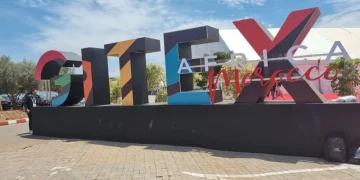

Ahead of Africa Tech Summit Nairobi (11 to 12 February 2026, Sarit Expo Centre), Malaika Ademola-Majekodunmi, Vice President, Global Payments Systems at Fincra, sat down for an interview with Techsoma Africa to explain why Fincra is sponsoring the summit and what it is really building.

In that conversation, Fincra’s CEO and co-founder, Wole Ayodele, is driving a company that is treating Africa’s payment fragmentation as an economic problem, not a product problem. And Fincra’s internal rallying word for that mission is “Afrincra.”
“Afrincra” is not a slogan. It is a diagnosis.
Fincra’s rallying word, “Afrincra”, is its shorthand for an anti-fragile African: a continent built to withstand shocks, policy swings, currency constraints, and broken cross-border rails.
The key point is not the poetry. It is the claim behind it: Africa’s growth is being taxed by fragmentation, fragmented currencies, fragmented rules, fragmented routes, and fragmented infrastructure. Every gap becomes a cost, delay, or failure risk, and as an anti-fragile African, we are building a culture of resilience and systems to overcome these challenges.
Fincra’s real differentiator: coordination over isolation
In the interview, Malaika’s most practical insight is that cross-border payments in Africa cannot be solved by one company operating alone, even if it is talented. It is a network problem.
So Fincra’s strategy leans heavily on partnerships: banks, regulators, industry players, and infrastructure collaborators. The stated goal is to reduce fragmentation by building multi-layered solutions across different rails, including cards and alternative payment methods, and doing the hard compliance work needed to make those rails durable across markets.
That stance is unglamorous, and that is why it is credible. Infrastructure wins when it becomes boringly reliable.
Building for Africa is not one playbook
Malaika breaks Africa into operating realities:
- Nigeria: deep familiarity, but complex constraints and a market that punishes weak execution
- Southern Africa: tougher capital controls and structural complexity that force tighter partnerships
- East Africa: comparatively more open FX handling in some markets, different navigation dynamics
- North Africa: an expansion opportunity, but with high complexity that demands early regulator engagement
The details may vary by country. The principle holds: localisation in African payments is not an option. It is the business.
The bank question is a strategy question
The interview touches the classic fintech arc: buy a bank, become a bank, partner with banks, or some combination. Fincra already positions itself as operating with regulated footprints in Nigeria, which supports its infrastructure posture.
The larger point is what Malaika implies: there is no single structure that solves African payments at scale. The winner is the player that can assemble the right structure per market, legally and operationally.
“Trillion-dollar company” is a signal of scope
Malaika states the ambition directly: Fincra wants to be a trillion-dollar company.
Taken literally, it is a headline. Taken strategically, it is a scope signal: the company is aiming beyond payment processing into the broader trade picture, the rails that allow Africa to move money within itself and with the rest of the world.
Why the Africa Tech Summit sponsorship fits
If you believe the problem is fragmentation, then sponsoring a convening platform makes sense. The summit is where the people who can reduce fragmentation gather: regulators, banks, partners, enterprise builders, and cross-border operators.
Fincra is not just sponsoring visibility. It is sponsoring proximity to the institutions that decide whether infrastructure gets to scale.
This article was written in collaboration with AI. At Techsoma, we embrace AI and the future.